Get Full Government Meeting Transcripts, Videos, & Alerts Forever!
Get email alerts on the Election Law topic
No spam. Unsubscribe anytime.
Senate advances bill keeping unaffiliated voters eligible for primaries after heated debate
Summary
The Utah Senate voted to continue a decade-long practice allowing unaffiliated voters to affiliate at the polls and participate in party primaries and related caucus processes. Supporters called the change a boost to voter access; opponents said it infringes on party nominating processes. The bill passed 24–4.
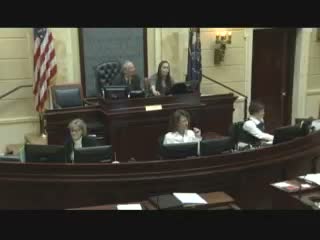
Senators on the Utah State Senate floor voted to extend a rule that lets unaffiliated voters participate in party primaries and related nominating steps, passing House Bill 262 after extended debate.
Sen. Daniel Wyler, the bill’s sponsor, told colleagues the measure simply "continues the status quo for the past 10 years" and preserves a mechanism that lets genuinely unaffiliated voters affiliate at the polling place within statutory limits so they can cast a primary ballot. Wyler said the change has generated "tens of thousands" of additional registered voters who otherwise would be turned away on primary day.
Opponents framed the measure as legislative intrusion into party nominating processes. "It is part of a political party’s nominating process," Sen. Stevenson said, arguing that parties should be allowed to decide who participates in their internal selections. Sen. Thatcher took a sharper rhetorical tone on the floor: "I hate this bill," she said, while also noting she would vote for it because the practice has been in place and clerical errors have caused eligible voters to be denied participation in the past.
Other senators focused on practical implications. Sen. Madsen pressed how easily a voter could affiliate and unaffiliate during the cycle; Sen. Weiler explained current practice allows unaffiliated voters to register at the polling place and that existing election laws and county clerks' procedures limit serial multiple voting and associated fraud. Supporters including Sen. Vickers and Sen. Hilliard said increasing participation—especially by younger and working voters—strengthens the nominating process.
The Senate advanced the bill to the third reading calendar after a roll-call vote tallying 24 yea, 4 nay and 1 absent. The chamber’s action maintains the option for unaffiliated voters to participate at the ballot box under the conditions described by sponsors; the bill will go to the House for further consideration or concurrence as required by the legislative process.
Next steps: The measure will proceed through the House as the session’s scheduling permits.