Get Full Government Meeting Transcripts, Videos, & Alerts Forever!
Get email alerts on the Education Budget topic
No spam. Unsubscribe anytime.
Senate passes supplemental measure to cover $25 million education funding shortfall
Summary
The Utah Senate approved SB 4,003 to plug a roughly $25.3 million shortfall in the school funding formula with one-time balances from state education and general funds; sponsors said the gap came from a WPU-counting error and pledged no cuts to allocations already approved.
The Utah Senate voted to pass Senate Bill 4,003 on final reading to address a roughly $25,000,000 shortfall discovered in the funding calculations for the Weighted Pupil Unit (WPU).
Senator Stephen Osman, sponsor of the bill, told colleagues the shortfall "was found that there was a $25,000,000 shortfall associated with the funding relative to WPU distribution" and said the State Office of Education discovered the error and had taken accountability. Osman said the bill uses one-time sources to fill the gap and corrects technical errors in other education-related legislation.
The bill draws roughly $25.3 million from a mix of one-time balances, including $16,000,000 from unused balances in the minimum school program and education fund from FY2011; $4,500,000 from unused FY2012 balances; about $2,900,000 from unappropriated FY2013 education fund balances; and $1,900,000 from unappropriated balances in the general fund to be allocated for FY2013. Osman said that package "will cover this shortfall with one-time monies" and that there will be "no cuts to any budget allocations from this last session."
Senator Hilliard and others pressed for clarity about the cause. Hilliard summarized staff findings offered by the State Office of Education: a miscount of enrollment, particularly among charter schools — "They missed the count by about 8,000 students," he said — which produced the funding gap. Hilliard and others emphasized that the state office accepted responsibility and had taken steps to correct counting procedures.
Senator Reid, who explained his vote, said the episode showed the need for independent verification of education data and indicated he plans to pursue legislation requiring fiscal analysts and the governor’s budget office to perform independent reviews of the data that inform budgets.
Supporters and opponents framed the measure as a stopgap. Multiple senators warned that using one-time money to fund ongoing obligations creates a structural challenge for the next general session; Senator Stevenson said the fix is "done with one-time money" and noted the state will face a decision next year about whether to make that funding ongoing.
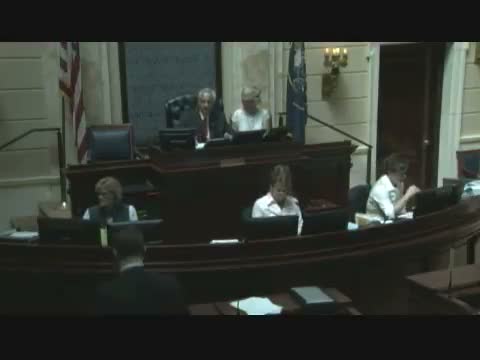
Under suspension of the rules, the Senate took the question and the bill passed on a roll call vote (final tally reported in the session record as 26 yeas, 1 nay, 2 absent). The bill will be forwarded to the House for its action.
What happens next: Sponsors said school districts will be held harmless for budgeting that begins July 1, but state leaders signaled the legislature will need to address the structural imbalance in the next general session.