Get Full Government Meeting Transcripts, Videos, & Alerts Forever!
Get email alerts on the Taxation topic
No spam. Unsubscribe anytime.
Senate approves tax exemption for most golf-course admission fees over objections
Summary
The Utah Senate approved first substitute SB 96 to exempt admission and user fees at most golf courses from sales and use tax, aiming to equalize competition with government-owned courses; the bill passed 23–4 amid split floor debate about expanding tax exemptions and fairness.
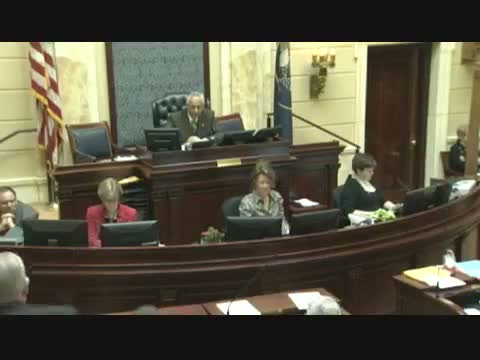
The Utah Senate on the floor passed first substitute Senate Bill 96, a sales-and-use tax exemption for admission and user fees at most golf courses, after a contentious debate about whether the measure improperly broadens tax exemptions. Sponsor Senator Jenkins said the bill’s aim is to “equalize that playing field” between government-owned golf courses and private operators.
“Over the years, the state and its entities, municipalities have operated golf courses,” Jenkins said in presenting the bill, arguing public facilities enjoy advantages — for example not paying property or sales taxes — that private courses do. Jenkins said the substitute removes an imbalance by exempting admissions and user fees except for courses owned by the state or political subdivisions.
Several senators expressed discomfort with offering another business-oriented tax break. Senator Thatcher said she “absolutely hate[s] the idea of offering a tax exemption to a business that should be successful” but added she disliked the current advantage government-owned courses enjoy and therefore voted aye. Senator Hilliard, who said he had “no conflict of interest,” voted no and argued the solution to competition concerns should be to require government entities to collect tax rather than broaden exemptions.
Senator Wyler also explained his vote, predicting constituent interest and phone calls. Debate included remarks about municipal competition with private businesses and questions about whether the bill broadened the sales tax base inappropriately.
The Senate recorded 23 yeas, 4 nays and 2 absent on the measure. Under the Senate’s procedures the bill will be placed at the bottom of the third-reading calendar for further processing and then forwarded for House action.