Get Full Government Meeting Transcripts, Videos, & Alerts Forever!
Get email alerts on the Privacy topic
No spam. Unsubscribe anytime.
Senate narrows access to license-plate reader data, requires court orders and shorter retention
Summary
The Utah Senate passed Second Substitute Senate Bill 196, which tightens rules on who can access automated license-plate reader databases and shortens retention for private scanners. Sponsors said the changes balance public-safety needs with privacy concerns.
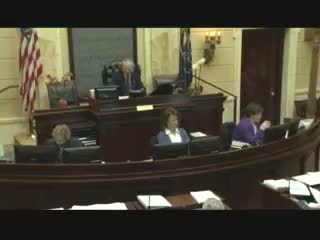
The Utah State Senate on the floor approved Second Substitute Senate Bill 196, a measure that tightens access to data gathered by automated license-plate readers and shortens how long certain private operators may keep scanned-plate data.
Senator Mark Weiler, sponsor of the second substitute, told colleagues the bill “basically does 3 things.” He said the most important change was procedural: in order to access the harvested data collected through license-plate scanning, an entity would need a court order rather than the current practice of showing a case number for a law-enforcement agency. He also described administrative-rule language in the bill and said private entities that scan plates to control access to secured areas would be required to delete that data after 30 days rather than retain it for 12 months under current practice.
Senator Weiler framed the bill as an attempt to put “a tighter lid on the data once it's collected,” and said it would not impede routine driver-license or plate checks for traffic stops. Senator Hilliard and other senators raised concerns about the scope and possible mission creep of plate-scanning programs; Hilliard said he was “uncomfortable with the government out with teams of people taking license plates and matching it up against some kind of list.” Senator Weiler acknowledged unease but said the changes represent a balance between privacy limits and investigative needs.
After floor discussion and brief exchanges on amendments and recording votes, the Senate passed the second substitute. The clerk recorded the outcome as 28 yea votes, 0 nay votes and 1 absent. The bill will be sent to the Utah House for its consideration.
Supporters said the bill narrows access and shortens retention to protect general privacy while preserving investigative uses; opponents urged ongoing review and possible future refinements. The Senate’s action sends the measure back to the House, where further consideration and any final adjustments would occur.