Get Full Government Meeting Transcripts, Videos, & Alerts Forever!
Get email alerts on the Firearms Policy topic
No spam. Unsubscribe anytime.
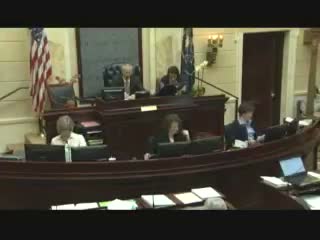
Senate advances concealed-carry amendments after wide floor debate
Summary
First Substitute House Bill 76, allowing legally open-carried firearms to be covered when 'unloaded' under Utah’s statutory definition, advanced to third reading after extended debate on training, safety and enforcement; the measure cleared the chamber on second reading 19–6.
Senators advanced First Substitute House Bill 76, which would allow individuals lawfully carrying a firearm openly to cover it (for example by draping a coat over the weapon) provided the firearm meets Utah’s statutory definition of "unloaded." Sponsor Senator Christiansen said the bill preserves gun rights while reducing the visual anxiety some citizens feel when others openly carry.
"This bill allows them to do it," Christiansen said, adding that the covered firearm "cannot be loaded" under the state's definition and noting the law’s technical distinctions about chambers and mechanical actions. He framed the measure as an incremental step that protects Second Amendment rights while accommodating public concerns.
Opponents on the floor urged caution. Senator Hinkins asked whether unpermitted people handling a firearm would be breaking the law; others, including Senators Robles and Vickers, emphasized the importance of training and public-safety considerations and said many constituents oppose loosening current restrictions. Several senators expressed support for concealed-permit processes and for retaining training requirements.
After sustained floor discussion the Senate recorded a vote to read the bill for a third time; the tally on the second-reading vote was 19 yea, 6 nay, 4 absent. Sponsors said the bill is intended as a modest, incremental change and that several other states have had similar rules for years.
What’s next: HB76 moves to third reading where additional amendment or final passage votes may occur.