Get Full Government Meeting Transcripts, Videos, & Alerts Forever!
Get email alerts on the Election Integrity topic
No spam. Unsubscribe anytime.
Senate passes fix for election-investigation conflict after debate over who appoints special counsel
Summary
The Senate approved SB 289 to require the lieutenant governor to appoint an outside special counsel when the attorney general is conflicted from investigating alleged election violations. Senators debated an amendment to substitute the chief justice for the lieutenant governor; that amendment failed and the bill passed unanimously.
SALT LAKE CITY — The Utah Senate on March 14 passed SB 289, a bill aimed at fixing an unintended gap in state law that could leave the attorney general investigating allegations against the attorney general's own office.
Sponsor Sen. Sarah Knudson told colleagues the measure "fixes an unanticipated flaw in an existing statute governing the process for investigating alleged election and campaign violations" by giving the lieutenant governor authority to appoint someone outside the attorney general’s office when the attorney general has a conflict of interest. "This bill solves this problem by requiring a lieutenant governor to appoint a person who is not an employee of the office of the attorney general to investigate and bring action when the office of the attorney general has this conflict," Knudson said.
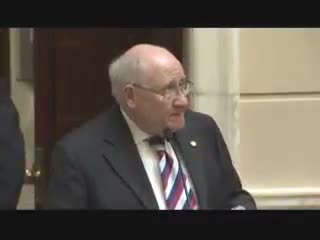
Several senators praised the bill’s goal but raised procedural and separation-of-powers concerns about giving appointment power to a single office late in the session. Sen. Dabakis moved an amendment to strike the lieutenant governor as appointing authority and instead have the chief justice of the Utah Supreme Court select the special counsel. Dabakis argued the change would avoid controversy and ensure independence: "it's best that we just move away from any controversy, get this person appointed, and have this person get about their business." Opponents, including Sen. Knudson and Sen. Urquhart, said the lieutenant governor’s office oversees elections and is the appropriate executive branch contact for enforcement. "The lieutenant governor is charged with the responsibility of enforcement of election law," Knudson said.
The amendment to substitute the chief justice was debated and then rejected in a voice vote. After defeating the amendment, the Senate suspended the three-reading requirement and advanced SB 289 for final passage. Under suspension of the rules the bill passed on a recorded vote, receiving 27 yea votes, 0 nays and 2 absences; it will be transmitted to the House for consideration.
What happens next: The bill will be sent to the House for their consideration and, if the House concurs, to the governor for signature. The immediate practical effect is to create a procurement-compliant process for appointing outside special counsel in election-related conflicts where the attorney general would otherwise be investigating the attorney general’s office.
Votes and procedure: The bill was debated on the second-reading calendar and advanced under a suspension of the three-reading rule before a roll-call final passage vote.