Get Full Government Meeting Transcripts, Videos, & Alerts Forever!
Get email alerts on the Parental Rights Restoration topic
No spam. Unsubscribe anytime.
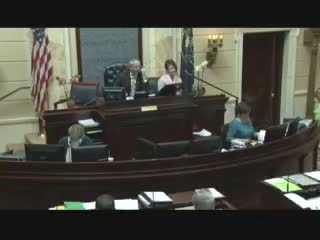
Senate substitutes and advances bill allowing limited restoration of terminated parental rights
Summary
The Utah Senate substituted and advanced a fourth substitute of House Bill 156 to create a limited process for restoring terminated parental rights for a small group of children in state custody, adding court-driven safeguards and imposing fiscal and procedural conditions.
The Utah Senate on the afternoon floor advanced a substituted version of House Bill 156 that creates a narrow mechanism allowing certain parents whose parental rights were previously terminated to seek restoration in limited circumstances.
Senator Wyler, who moved the substitution, framed the measure as targeted at a “very, very small group” of parents and children and said the substitute aligns with court concerns by requiring a petition initiated through the guardian ad litem or the Division of Child and Family Services (DCFS) in most cases. Wyler noted the bill sets the waiting period for petitions at two years, departing from a three‑year waiting period recommended by some national models.
Senator Dayton described the human context for the bill, saying, “I cannot help but think that 700 cases of terminated parental rights a year in this state is a lot,” and urged the Senate to consider reunification where it can be done safely. Proponents emphasized mandatory notification to children age 12 and older and that a guardian ad litem must represent those children and express their wishes in court.
Opponents and skeptics focused on funding and implementation. Senator Hilliard and others highlighted the bill’s fiscal note and warned that courts, the Attorney General’s office and the guardian ad litem program would incur additional costs. Hilliard said the fiscal note showed multi‑year costs (discussed in testimony) and that leadership had not yet identified funding in upcoming appropriations, leaving agencies to absorb costs if the bill passes without line‑item funding.
The Senate adopted Amendment 1 to the substitute to clarify statutory language about jurisdictional bases for transferring custody and to require service of petitions on DCFS as well as juvenile courts. The sponsor said the amendment reflected language requested by the courts to reduce ambiguity about undefined phrases such as “gravest reasons.”
After extended debate about policy trade‑offs, fiscal impacts and procedural safeguards, the Senate voted on the fourth substitute. The Clerk recorded 20 yes votes, 1 no and 8 absent; the substitute was read for the third time and advanced under Senate procedures.
Next steps: the substitute was advanced on the Senate floor for further reading. Any future fiscal or implementing detail will be handled in follow‑up appropriations or implementing rulemaking as needed.