Get Full Government Meeting Transcripts, Videos, & Alerts Forever!
Get email alerts on the Election Law topic
No spam. Unsubscribe anytime.
Senate Approves Corporate Campaign‑finance Disclosure Measure After Legal Concerns
Summary
Senators approved an amended bill requiring disclosure of larger corporate political donations, prompting debate over constitutionality, practical circumvention and impacts on small nonprofits; the measure passed after suspension of rules and roll‑call voting.
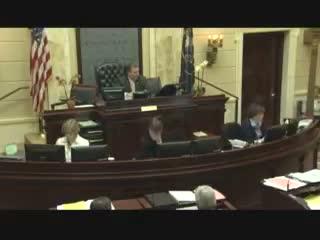
The Senate passed an amended House Bill 43 on the second‑reading calendar after extended debate about disclosure thresholds and constitutional risk. Sponsor Senator Hilliard framed the bill as a transparency measure aimed at ‘‘super PAC’’‑style spending and said the law would force some sunlight on funding sources for political issue expenditures.
"We're currently in a pitch black, dark room. We have absolutely no idea where this money's coming from," Hilliard said on the Senate floor, arguing that disclosure of larger donations improves transparency for voters and candidates.
Opponents — including Senator DeBaca and Senator Valentine — warned the measure may be vulnerable to as‑applied constitutional challenges and could be ineffective because actors would likely use intermediary entities to conceal ultimate donors. DeBaca said it risks burdening local, small fundraising groups while big money seeks circumvention.
Senator Robles pressed how the bill treats donations to nonprofits (5(1)(c)(3) charities) versus political action committees; sponsors clarified that gifts to a charity not made for political purposes would not automatically trigger disclosure, but money used for political issue expenditures would be subject to the measure and signature attestation requirements introduced in committee.
The Senate adopted an amendment by Hilliard, suspended the three‑reading rule for fiscal‑note bills, and passed the first substitute on a roll call (vote recorded at 20 yea, 8 nay, 1 absent). Sponsors signaled willingness to refine exemptions if implementation burdens on small nonprofits become apparent.