Get Full Government Meeting Transcripts, Videos, & Alerts Forever!
Get email alerts on the Convention Hotel topic
No spam. Unsubscribe anytime.
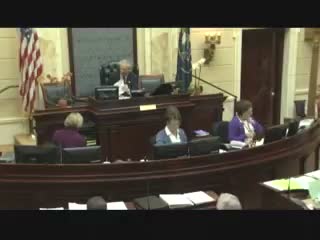
Senate approves post-performance tax incentives for proposed Salt Lake convention hotel amid split debate
Summary
The Utah Senate passed SB 267 to allow post-performance tax rebates for convention facilities and parking associated with a proposed downtown convention hotel. Supporters called it a modest, performance-based tool to attract conventions; critics warned of tax-exempt competition and urged further study.
The Utah Senate on [date not specified] approved Senate Bill 267, a measure authorizing limited post-performance tax incentives tied to parking structures and convention facilities associated with a proposed downtown convention hotel.
Sponsor Senator Adams said the bill simply allows the state to rebate part of sales tax revenue that the hotel operation would generate, and only after that revenue exists. "This is a post performance tax credit," Adams said, adding the credit would be paid only if sales tax is generated by the project and would not subsidize guest rooms. He said the intent is to help the convention center market and boost tourism and job growth.
Opponents raised concerns about the project’s structure and potential effects on existing downtown hotels. One senator produced two notebooks of economic studies and warned that similar convention-hotel models in other cities have left long-term debt burdens; the senator said Denver and Phoenix convention hotels had combined debt of $1,300,000,000 under comparable models and cautioned about revenue timing. Senator Knudson cited occupancy data from Smith Travel Research to argue there is some room for growth in existing hotels: "During the year 2011, the occupancy rate was 64.2% and the occupancy rate in 2012 was 66.3%."
Sponsor Adams and backers said the measure is limited in scope: it excludes direct subsidies for hotel rooms, applies only to common areas such as parking and meeting facilities, and ties incentives to actual sales-tax performance rather than up-front appropriations. Adams also noted that many industries in Utah have used post-performance incentives to attract jobs and investment.
The Senate adopted a technical amendment and voted to suspend the constitutional three-reading requirement before taking a roll-call. The chamber approved the bill; recorded votes showed the measure passed (recorded as a 15–13 split with one senator absent). The bill will be sent to the House for its consideration.
What happens next
The bill authorizes a tool for Salt Lake County and local partners but does not approve any specific hotel or county-level subsidy. County officials and local procurement processes (such as an RFP) still control whether an actual hotel project moves forward and how catering and vendor contracts are awarded.
Funding and legal limits
The measure structures incentives as post-performance rebates tied to project-generated sales taxes. Supporters stressed the state would rebate only generated taxes and not draw on general-fund revenue to cover shortfalls; opponents warned about the competitive effect on existing downtown hotels and the potential for multi-year debt service delays cited in out-of-state examples.
The Senate returned the bill to the House for consideration.