Get Full Government Meeting Transcripts, Videos, & Alerts Forever!
Get email alerts on the Education Property Tax Equalization topic
No spam. Unsubscribe anytime.
Utah Senate Debates Property-Tax Equalization Bill That Would Shift Revenue into Per‑Pupil Funding
Summary
Senate Bill 81 prompted an extended floor debate over whether changing the state's minimum basic property tax rate to channel funds through the Weighted Pupil Unit would equalize school funding or merely redistribute locally raised dollars. Sponsor Sen. Osmond said the plan creates 'new money' for the WPU; opponents warned of local tax impacts and Truth in Taxation hearings.
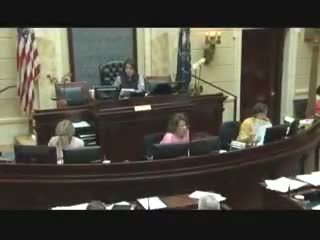
Senate Bill 81, a proposal to change how some property-tax revenue is treated and routed through the state's Weighted Pupil Unit (WPU), prompted an extended floor debate on the Utah Senate on March 4.
Sponsor Senator Osmond, presenting detailed spreadsheets, said the bill would set a floor for the "minimum basic" property-tax rate and route the resulting revenue through the WPU to equalize per‑student funding across districts. "Last year I traveled the state and met with district leaders... I believe we need to reinforce that distribution when it comes to property taxes," Osmond said, explaining the policy is intended to boost funding for districts that currently lack revenue per student.
The sponsor highlighted stark contrasts among districts, citing Park City's estimated property value per student of roughly $2.5 million versus more typical districts in the $172,000–$214,000 range. Osmond said the plan would direct money through the WPU and require local boards to offset the change by reducing local levies so the state's action does not create a net tax increase in aggregate.
Opponents argued the bill effectively redistributes revenue already raised locally. Sen. Jones warned it is a "Robin Hood bill" that would force roughly 25 of 41 districts into Truth in Taxation proceedings to retain their current revenues; Sen. Davis pressed that equalization belongs to the state's income-tax–funded school finance system rather than by taking local levies. "What we're doing is going to those school districts who have used their local control...and the people have granted that in those districts. Now we want to take that money and move that money elsewhere," Davis said.
Other senators raised concerns about retroactivity and timing: Sen. Van Tassel asked why the sponsor proposed making the change effective Jan. 1, 2013, questioning whether that would interrupt mid‑cycle budget decisions; Osmond replied he included that date to give districts time to respond and said the date could be amended if needed. Sen. Hankins and others noted unique burdens on counties with Indian reservations where taxable property is limited.
Several supporters said the change would be incremental and would avoid the large immediate fiscal shock seen in prior proposals. Sen. Stevenson and others said equalization was needed to address long‑standing disparities in how much can be spent per pupil across districts.
After more than an hour of questions and back-and-forth, the sponsor asked to "circle" the bill for further study and discussion, and the chamber approved that procedural motion. No formal vote on the measure's merits was taken; the sponsor said he plans additional conversations with colleagues in the following days.
Next steps: Sen. Osmond said he will continue outreach and bring amendments before the body; the bill is circled for further work.