Get Full Government Meeting Transcripts, Videos, & Alerts Forever!
Get email alerts on the State Legislation topic
No spam. Unsubscribe anytime.
Utah Senate session moves dozens of bills; work-week reduction fails, health and consumer measures advance
Summary
The Utah Senate debated a wide package of bills Feb. 25, 2013, rejecting a work-week reduction for small offices but advancing measures on consumer protections, oral chemotherapy coverage parity, a federal-funds study commission, and other policy changes; several bills were circled for later action.
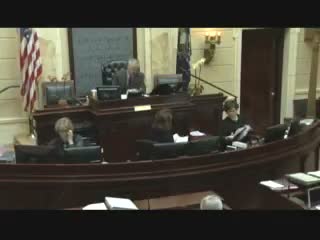
The Utah State Senate met in floor session and considered a broad slate of legislation Feb. 25, 2013, advancing several measures and rejecting one notable bill aimed at easing statutory staffing requirements.
A motion to reduce the statutory work-week for small offices from 45 to 40 hours (First Substitute Senate Bill 112) failed on third reading after the sponsor, Senator Osman, said the measure would allow small agency offices to comply with statute and to use technology to provide live access to constituents. Senator Valentine and other lawmakers raised concerns that the change could encourage agencies to substitute online or phone services for in-person access; the clerk recorded 14 yays and 11 nays but the bill did not reach the constitutional majority required and was filed.
Lawmakers approved a package of other bills. Third Substitute Senate Bill 67, a one-year, negotiated consumer-protection measure tied to settlements involving payment processors, moved forward after floor sponsor Senator Bramble described it as a stakeholder compromise with a one-year sunset. First Substitute Senate Bill 189, which would require certain oral chemotherapy drugs to be covered on par with IV chemotherapy under health plans, passed after floor discussion about monthly copay limits and practical implementation by pharmacy benefit managers; the sponsor said negotiators reached a $250 monthly cap as a compromise with insurers.
Criminal penalties were adjusted in First Substitute Senate Bill 52, which makes certain cockfighting-related conduct a third-degree felony; supporters said the change reduces gambling and related criminal activity. Senate Bill 70, which establishes a commission to study Utah's dependence on federal funds and recommend ways to reduce fiscal risk, was also approved and reported as receiving 26 yays and one nay.
Several technical and policy bills were moved to later consideration or to third reading. First Substitute Senate Bill 64 (Homeowners Association reserve-account amendments) was uncircled and advanced to third reading; a substitute for SB 55 increased eligibility ages and requested a $1.5 million one-time funding boost for an autism pilot program to improve the pilot's sample size; and Senate Bill 201 (Public Use Trails Amendments) was substantially narrowed by substitute language to limit when eminent domain may be used for certain trail projects and then circled for further work.
On nonlegislative business, the Senate presented a citation honoring John Nord, director of the Utah Department of Transportation, for 25 years of service and 12 years as executive director.
Votes at a glance: - SB 112 (Work week amendments) — motion failed (14 yays; did not reach constitutional majority) — filed. - SB 67 (Consumer protection revisions) — passed on third reading. - SB 187 (Food handler licensing amendments) — circled to return to third-reading calendar. - SB 189 (Oral chemotherapy coverage parity) — passed (reported 27 yays, 1 nay). - SB 52 (Cockfighting penalty increase) — passed (vote recorded; bill advanced to third reading and read for third time). - SB 70 (Federal funds commission) — passed (26 yays, 1 nay, 2 absent). - SB 64 (HOA reserve-account amendments) — uncircled/advanced to third (27 yays, 0 nays recorded on later roll call). - SB 55 (Autism pilot amendments) — substitute moved; advanced toward third with requested funding increase. - SB 73 (Outdoor Recreation Office Act) — amended and advanced to third reading (23 yays, 2 nays reported). - SB 74 (Dignified burial of veterans' remains) — passed (22 yays, 0 nays reported). - SB 102 (Contractor licensing amendments) — amendments adopted; advanced to third reading (reported 26 yays, 0 nays, 3 absent). - SB 143 (Mortgage and foreclosure amendments) — moved to third reading (26 yays, 0 nays, 3 absent). - SB 59 (Workers' compensation coordination) — moved to third reading. - SB 201 (Public Use Trails Amendments) — substitute adopted narrowing scope; circled for future work.
What matters: The session mixed large policy items with technical fixes. The failure of the work-week bill preserves the current 45-hour statutory framework for small offices and underscores lawmakers' concern about substituting technology for in-person access. The oral-chemotherapy parity bill signals insurer-stakeholder compromise intended to reduce out-of-pocket costs for cancer patients who take oral therapies. The narrower eminent-domain substitute on trails drew the sharpest cross-jurisdictional debate, pitting urban trail advocates who want completion of regional trail systems against rural and agriculture interests concerned about property rights.
The Senate recessed to reconvene in the afternoon for second-reading items and additional third-reading votes.