Get Full Government Meeting Transcripts, Videos, & Alerts Forever!
Get email alerts on the Legislative Proceedings topic
No spam. Unsubscribe anytime.
Votes at a glance: key bills advanced on Utah Senate floor
Summary
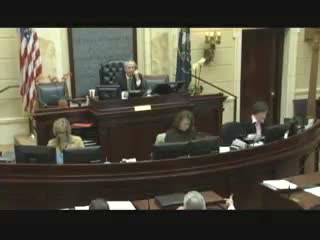
The Senate advanced a slate of bills on consent and third reading, including measures on hospital reporting, criminal justice, agency boundaries, and insurance. Several bills passed unanimously or by recorded roll calls and were sent to the House.
The Utah Senate cleared a series of bills on consent and third reading during Day 36. On consent and by voice or unanimous recorded votes, the Senate advanced a range of measures — from updates to hazardous waste fees and property‑assessment rules to technical boundary reconciliations. Several notable outcomes recorded on the floor include:
- Senate Bill 230 (Minors hospital reporting amendments): Sponsor Senator Hinkins described reporting requirements for the University of Utah; the bill passed unanimously and was sent to the House (26–0 with absences recorded). (See floor presentation and recorded tally.)
- First substitute, Senate Bill 189 (Oncology insurance amendments): After a sponsor amendment changing a monthly out‑of‑pocket limit to $300 and a friendly adjustment to the bill’s effective date (changing July 1 to Oct. 1 for plan renewals), the bill passed on roll call and was transmitted to the House.
- First substitute Senate Bill 52 (cockfighting): Passed on a recorded roll call, 19–9 after the failure of a motion to reduce penalties. (See full article for debate details.)
- Senate Bill 112 (assessment of property when threatened or endangered species present): Passed by recorded voice and will be sent to the House.
- Multiple health, labor and professional regulation bills (including SB 55 on autism coverage expansion and SB 194 pharmacy practice amendments) were amended and advanced; in several cases sponsors waived summation and the bills passed with recorded tallies as entered on the floor.
These outcomes reflect the Senate’s combined use of the consent calendar, substitution and amendment, and roll‑call voting to move the Legislature’s workload forward. Bills that were circled or encircled on the calendar will return for later consideration.