Get Full Government Meeting Transcripts, Videos, & Alerts Forever!
Get email alerts on the Water Policy topic
No spam. Unsubscribe anytime.
Senate passes water-change application bill after heated debate over sunset carve-out
Summary
After extended floor debate over whether to add a temporary sunset and carve-outs for cities, the Utah Senate approved a first substitute to Senate Bill 109 (change application procedure), restoring broader authority to the state water engineer and preserving court review; the vote was 19–9 (1 absent).
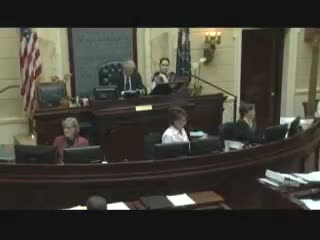
SALT LAKE CITY — After more than two hours of floor debate, the Utah Senate approved a first substitute to Senate Bill 109, a measure changing procedures for water-right change applications, by a roll-call of 19 yea, 9 nay, 1 absent.
Senator Karen Okerlund, sponsor of the bill, said the measure ‘‘brings it back to the legislature to give the power to the state engineer to be able to address all of these issues’’ and stressed that ‘‘there is a remedy’’ when parties disagree: either side may appeal to the courts. ‘‘The protestant or the applicant can then go to the courts and appeal any decision that is made by the state water engineer,’’ she said during floor remarks.
Opponents pushed a second-substitute amendment offered by Senator Hinkins that would have added a sunset date — December 30, 2016 — making the new application regime temporary so lawmakers could ‘‘re-evaluate how that has worked.’’ Hinkins said the sunset ‘‘gives us a 2-year trial’’ on the carve-out and would ‘‘open it up to everybody, not just the cities.’’
Supporters of the sponsor warned the sunset would undo months — they described them as ‘‘fragile’’ — of negotiations with local governments. ‘‘The League of Cities and Towns is very definitely opposed to this second substitute to the sunset date and would withdraw their support for the bill if this second substitute is passed,’’ Okerlund said on the floor, arguing that the compromise reached with cities and towns would be derailed.
Other senators framed the dispute as a question of administrative authority. ‘‘This bill says the bureaucracy in the state water engineer’s office creates water law in this state,’’ said Senator Madsen during debate, expressing concern that the bill would shift lawmaking authority away from elected lawmakers. Senator Reid and others said the bill is meant to respond to court decisions and restore the Legislature’s role through the executive process.
The chamber also considered procedural motions during debate. Senator Madsen moved to circle the bill to give senators more time to study the second substitute; the motion to circle failed on a voice vote. Senator Jenkins spoke in favor of substituting, noting the substitute ‘‘gives many people who are worried about this some sense of confidence to the fact that we’ll have a chance to look at it again in two years.’’
With debate concluded, the Senate recorded the final tally: 19 yeas, 9 nays, 1 absent. The first-substitute version of SB109 will now be transmitted to the Utah House for its consideration.
What the bill does: Sponsors said the measure clarifies the process for change applications so the state water engineer can review and rule on certain applications — an action sponsors framed as a legislative response to recent court rulings that had removed or limited certain administrative authorities. Opponents said the bill creates a carve-out favoring municipalities and argued for broader participation and protections for small water users.
Next steps: The first substitute will be sent to the Utah House for consideration. If the House takes it up, it may be amended further or returned to the Senate.