Get Full Government Meeting Transcripts, Videos, & Alerts Forever!
Get email alerts on the Infrastructure And Finance topic
No spam. Unsubscribe anytime.
Senate amends prison-relocation bill to remove automatic tax-increment entitlement, adds timeline and minority seat; circle set for further review
Summary
Lawmakers amended second substitute SB 72, a prison relocation and development bill, to remove an automatic 50% tax-increment entitlement and to add deadlines, meeting frequency, and a legislative minority appointee; senators voiced concerns about whether local zoning and financing will suffice to fund demolition, relocation and new construction.
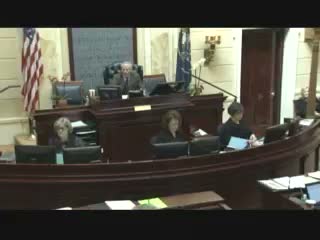
After extended debate on the floor, the Utah Senate substantially amended second substitute Senate Bill 72, which lays out a governance and financing framework for relocating the state prison and redeveloping the vacated site.
Sponsor Senator Jenkins walked the chamber through multiple floor amendments. Senator Madsen's Amendment 6, which removes a statutory entitlement that would have automatically diverted up to 50% of tax-increment revenues (including portions of sales- and property-tax increases) to the project, passed. Madsen said striking the entitlement preserves the ordinary tax-increment financing (TIF) process and transparency for local taxing entities; Jenkins and others described TIF as a backstop rather than the principal financing source.
Amendment 7, which would have struck the requirement that the appointed authority itself formulate and adopt the conceptual plan (instead directing RFP respondents to propose conceptual plans), failed after debate over whether removing the board's role would de-link the city from planning oversight.
A substitute motion to alter board composition'including a proposal to require one of the legislative appointees be from the minority party'passed by roll call (23 ayes, 6 nays). Senator Urquhart and others argued for a more balanced board with municipal, county and legislative representation; opponents worried the governor's appointees would dominate. Amendment 8, which imposes explicit deadlines and meeting-frequency requirements (GOPB staffing if necessary, board meet twice monthly, RFP issuance within 60 days of first meeting, 60 days for respondents, 60 days for board review), was adopted as friendly.
Throughout the debate Senators expressed skepticism about project finance. Senator Reid warned that tax increment and new development revenues would not materialize until after construction and that local taxing entities are unlikely to support diverting revenues to build a prison; he said the bill currently lacks a clear financing plan tying zoning, projected land uses, and revenue streams to the statute's financing assumptions. Sponsor Jenkins and backers said the project is expected to be largely self-funding through operational savings and land-sale proceeds (Jenkins cited initial estimates of $17'$20 million in savings and land-sale proceeds of $100'$140 million presented in an RFI), and that TIF language had been included only as a contingent backstop.
Given the complexity and the number of floor amendments, the sponsor moved and the chamber approved a motion to "circle" the bill (hold for overnight review) so members and staff can reconcile the amended text before further action.
What happens next: the bill was circled for continued consideration; floor debate identified key outstanding issues for any next floor consideration including detailed financing assumptions, interlocal agreements with the host city, and clear RFP rules so potential developers can price proposals.