Get Full Government Meeting Transcripts, Videos, & Alerts Forever!
Get email alerts on the Wireless Location Law topic
No spam. Unsubscribe anytime.
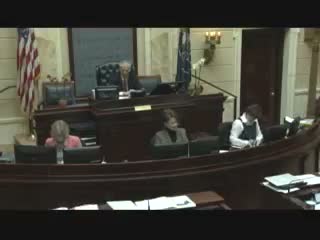
Senate advances bill to let police request phone‑location pings in life‑threatening cases
Summary
The Utah Senate advanced House Bill 104, a sponsor‑backed measure creating a streamlined process for law enforcement to request wireless providers’ location information in cases where someone is believed to be at risk of death or serious injury; supporters cited the Kelsey Smith case, while critics warned the language may be too broad on warrant and scope.
Senator Daniel R. Davis, sponsor of House Bill 104, told the Senate the measure is aimed at allowing law enforcement to quickly obtain the location of a wireless device when a person is believed to be at risk of death or serious physical injury. “When law enforcement asked the local wireless provider for the ping records, it would pinpoint the location,” Davis said, describing the 2007 Kelsey Smith abduction as the bill’s motivating example.
The bill, Davis said, “affords immunity to wireless companies that choose to give information.” He added that carriers would not be required to turn over records absent a warrant but could voluntarily provide information in emergency requests to help locate people fast.
Several senators pressed the sponsor on the bill’s language. Senator Henderson asked whether the statute required a warrant or relied on a broader “emergency” standard; Henderson said she did not “remember seeing anything about a warrant” in the draft and asked how an emergency situation would be defined. Senator Davis answered that section 2 requires providers to respond to requests in certain circumstances while section 3 allows providers to establish voluntary procedures for responding, and that the measure was intended to be used when “life was at stake.”
Senator Harper and Senator Madsen raised concerns about a potential statutory conflict between a clause that uses the word “shall” and another that describes voluntary response procedures. Madsen said the bill’s description of risk — “at risk of death or serious bodily injury” — could sweep in non‑imminent circumstances and asked whether the draft should require imminence to limit use.
Sponsor Davis reiterated the bill’s limited focus: the provision targets situations where law enforcement has determined a person is at risk and needs a quick ping of a known number. “It’s calling the number that is known, pinging that number to find the location so you can respond quickly,” Davis said.
After debate and questions, the Senate called the question and recorded the roll call. The clerk announced the tally in the transcript (recorded as 17 ayes, 5 nays, 7 absent in the floor record), and the bill was ordered read for a third time and advanced to the next stage.
The measure leaves open several implementation details debated on the floor: whether the statute’s “shall provide” language creates a mandatory duty on carriers in some subsections, how emergency or imminence will be defined in practice, and what internal procedures carriers may adopt for voluntary compliance. Those issues were the source of floor amendments and sponsor clarifications during discussion. The Senate did not amend the bill on the floor during this session; the transcript records the floor vote and sponsor responses as described.