Get Full Government Meeting Transcripts, Videos, & Alerts Forever!
Get email alerts on the Local Government topic
No spam. Unsubscribe anytime.
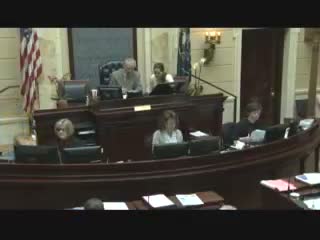
Senate amends and approves HB 279 to let counties hold administrative hearings, scales back proposed penalty
Summary
After floor debate over criminal penalties, the Senate amended House Bill 279 to keep maximum ordinance violations at class C for counties and passed the bill 18–9. Senators debated concerns that elevating penalties to class B would increase incarceration for locally defined offenses.
Senators on the floor amended and passed House Bill 279 on administrative hearings for counties, changing proposed maximum penalties so counties may not seek class B misdemeanor sanctions for ordinance violations and instead remain at class C. The amended bill passed the Senate 18–9 and will be sent to the House for further consideration.
The bill’s sponsor, Senator Vickers, said the legislation gives counties authority similar to cities to adopt ordinance procedures and formal administrative hearings intended to resolve local violations without burdening court resources. Vickers noted the language largely mirrors limitations already used by cities and framed the measure as clarifying—not expanding—county authority.
Opposition coalesced around concerns about increasing potential jail time. Senator Thatcher argued raising county ordinance violations from class C (maximum three months’ jail) to class B (maximum six months) risked escalating incarceration for locally created offenses. “My concern is that we have this tendency to want to incarcerate people for longer and longer periods,” Thatcher said, urging that penalties be scaled back.
Senator Vickers said he was open to revisiting penalty class in separate legislation but initially defended aligning county authority with cities; after floor amendments were offered, he supported the change on the floor. The Senate adopted an amendment on line 39b (and a conforming change on line 39g) replacing the proposed class B maximum with class C.
Procedural steps on the floor included an initial vote sequence that failed or was otherwise unclear in the transcript and a subsequent hold requested by Senator Bramble to allow reconsideration. The Senate later voted to reconsider, adopted Senator Thatcher’s amendment to lower the penalty class, and approved the bill as amended.
Outcome and next steps: the bill will be transmitted to the House for further consideration. The Senate’s final roll call on the amended measure was recorded as 18 yay, 9 nay, 2 absent.
Speakers quoted in this report appear in the Senate transcript and on the floor record; direct quotes and vote tallies are taken from the official floor exchange and clerk’s announcements.