Get Full Government Meeting Transcripts, Videos, & Alerts Forever!
Get email alerts on the Prison Relocation topic
No spam. Unsubscribe anytime.
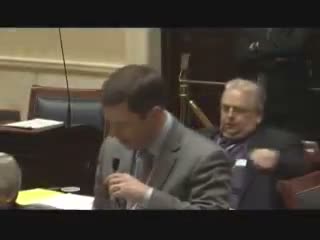
Senate advances plan to explore moving Draper prison, approving creation of a land-management authority
Summary
After extended floor debate, the Utah Senate approved moving second substitute Senate Bill 72 forward so a new Prison Land Management Authority may issue RFIs and evaluate whether relocating the Draper prison is economically viable; the bill passed on second-to-third-reading motion 18–7 with four absent.
The Utah Senate on the afternoon calendar advanced second substitute Senate Bill 72, a measure directing a new Prison Land Management Authority to study and pursue options to relocate the state prison and develop the old Draper site.
Sponsor Senator Jenkins said the legislation follows a series of requests for information and seeks to give a statutorily authorized board tools to test whether moving the prison can be financed by operational savings, sale or redevelopment of the current site, and other financing options. He told colleagues the committee received eight responses to its inquiries and that preliminary committee estimates put annual operational savings at roughly $17 million to $20 million. Jenkins said the committee estimated the current Draper site’s present value at about $70 million to $90 million and, after remediation and redevelopment, that the property could be worth substantially more. He also said a new facility could cost in the range of $550 million to $600 million and may require 300–400 acres.
Supporters said the proposal will let an appointed board evaluate financing models, issue RFIs/RFPs, and return with concrete recommendations that the Legislature could accept or reject. Senator Madsen and others said additional hearings and committee work have already gathered public input. The sponsor acknowledged uncertainty about making projected operational savings bondable and said the authority would examine financing options — including bonding structures and lease-to-own approaches discussed in the committee’s fiscal materials.
Opponents pressed procedural and policy concerns. Senator Hilliard and others raised skepticism about relying on future savings to finance a bondable project and urged a clearer plan to protect corrections staff pay and program funding. Senator Eckhart and Senator Jones criticized the proposed board composition as too heavily weighted toward gubernatorial appointees and signaled they will file amendments to broaden local and legislative representation. Senator Day expressed concern about media perceptions that the measure was being fast-tracked and said the public should be assured of ample oversight. The sponsor indicated willingness to negotiate board make-up and said the House is likely to revisit membership.
The measure includes several transparency and procurement provisions: the sponsor said advisory board meetings up to the point of proposal evaluation will be open under the Open and Public Meetings Act, while executive sessions will be used when confidential RFP proposals are under review; the sponsor also said procurement and post-award justifications will be public under state procurement rules and transparency-site requirements.
On the motion that second substitute Senate Bill 72 be read for a third time (effectively advancing the bill toward final consideration), the Senate recorded 18 ayes, 7 nays and 4 absent; the clerk announced the motion passed and the bill was placed on the third-reading calendar for later action.
Next steps: the bill is scheduled to proceed through the remaining reading and amendment process; if the authority later recommends moving the prison and the Legislature approves, additional financing or implementing legislation would be required and the governor’s concurrence would be necessary.