Get Full Government Meeting Transcripts, Videos, & Alerts Forever!
Get email alerts on the State Surplus Property topic
No spam. Unsubscribe anytime.
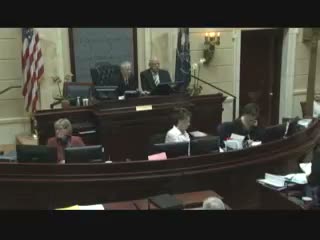
Senate advances bill to privatize state surplus property sales, excludes SITLA assets
Summary
The Senate advanced a substitute for SB 68 to allow private vendors to sell state surplus property via online auctions, citing efficiency and a positive fiscal note; an amendment preserved School and Institutional Trust Lands Administration (SITLA) assets from the change. The measure was placed on the third-reading calendar after a recorded vote.
Senator Weiler, sponsor of the substitute for Senate Bill 68, told the Senate the state—s surplus property program is inefficient and costly and proposed contracting with private vendors to sell surplus items in place through an online auction process. He said the current system stores goods in a Draper warehouse open only a few hours a week and incurs pickup and storage costs that could be avoided by allowing buyers to take items directly from the owning agency.
"If that's listed out at an auction-type website, and it doesn't sell, then the agency would have the opportunity to throw that away or to donate [it]," Weiler said, arguing the change would eliminate mileage and storage expenses that now reduce the value recovered for taxpayers. He described the substitute as aligning Utah with at least a dozen other Western states that already use vendor-run sale platforms.
Why it matters: The substitute, supporters said, could reduce state operating costs and return more proceeds to agencies by removing the need for state-run warehousing and pickup. The fiscal analyst revised an earlier projection after sponsor input; the sponsor said the bill now carries a positive fiscal note approaching $800,000 in net benefit to the state.
What the amendment did: After discussion the sponsor offered and the Senate adopted Amendment 1 to the first substitute, clarifying that surplus property would not include assets held by the School and Institutional Trust Lands Administration (SITLA). The amendment passed by voice vote and preserved SITLA—s existing authority over its mineral- and trust-related assets.
Procedural status and next steps: The Senate voted 26-0, with three absent, to advance the amended first substitute for third reading and final consideration. The bill was circled earlier to allow public review and returned to the floor with the amendment in place; if passed finally, the measure would direct the Department of Administrative Services to contract for vendor-managed sales and implement an online process for surplus property disposition.
Implementation and concerns: Sponsor Weiler said agencies would still be able to dispose of low-value items by donation or disposal if auctioned items do not sell, and that most sale revenue would flow back to the originating agency rather than being consumed by storage and transportation costs. Questions raised in floor debate focused on procurement details: how the RFP would be structured, which categories of items would be eligible, and safeguards to prevent auctioning property the state should retain. The sponsor said those operational details would be addressed in contracting and agency guidance, and that conversations with affected agencies informed the substitute.
Next steps: The bill is scheduled for third reading; supporters say it will reduce waste and recover more value for taxpayers, while opponents and staff will continue monitoring contract terms and exclusion lists such as the SITLA carve-out adopted on the floor.