Get Full Government Meeting Transcripts, Videos, & Alerts Forever!
Get email alerts on the Higher Education topic
No spam. Unsubscribe anytime.
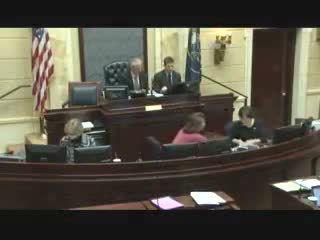
Senate approves scholarship changes after debate over IB weighting, credit requirements and lawful‑presence language
Summary
Senate Bill 100 passed after extended debate on whether to weight International Baccalaureate credit, whether scholarship recipients must 'register and maintain' 15 credits, and whether parts of the bill inadvertently changed verification of lawful presence for scholarship eligibility; the bill passed as amended 26‑2.
Senate Bill 100, carried by Senator Jay Stevenson at third reading, proposes technical and substantive changes to Regents and New Century scholarship rules, including: optional cancellation of scholarships for students not maintaining at least 15 credit hours, a minimum 3.3 GPA standard for retention, and allowing international‑baccalaureate (IB) coursework to be used in weighted criteria.
Floor debate focused on three issues. First, opponents of IB weighting (Senator Dayton and others) expressed ideological objections to the IB program; supporters (Senator Jones, Senator Knudson and others) defended IB as a rigorous college-preparatory pathway accepted by Utah universities. Second, Senator Christensen proposed—and the body considered—an amendment to require students to "register and maintain" at least 15 credit hours to avoid gaming the registration requirement; that amendment failed after senators argued that Regents and institutions need some discretion for students with heavy course loads or employment commitments. Third, Senator Valentine moved to delete ambiguous language he said created a conflict about whether verification of lawful presence was required; debate clarified that federal FAFSA-based eligibility remains a limiting factor for those not eligible for federal student aid and the deletion was adopted.
Senators were told the bill has no net fiscal impact and that program administration would be managed within existing resources; supporters said the changes give the Board of Regents incremental flexibility to protect scholarship integrity. The bill passed as amended by a roll-call vote of 26‑2 and will proceed to the House.