Get Full Government Meeting Transcripts, Videos, & Alerts Forever!
Get email alerts on the Transportation topic
No spam. Unsubscribe anytime.
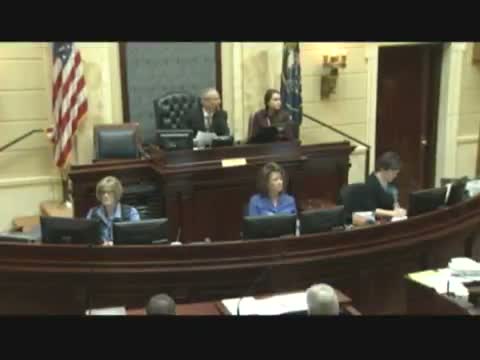
Senate advances commercial-driver license changes, debate centers on handheld-device rules
Summary
Senate members uncircled SB 19 to conform Utah’s commercial-driver licensing rules to a federal audit and engaged in debate over whether mirrored federal prohibitions on handheld devices and push-to-talk features are appropriate; sponsor said the bill mirrors federal law while some senators sought clarification about voice-activation ("Siri") and enforcement.
Senate Bill 19, a set of commercial driver's license (CDL) amendments, was moved forward from the circled list after sponsor remarks that the measure responds to a federal audit needing code corrections.
Senator Van Tassel said the bill aligns state law with federal standards, including provisions that allow the Driver License Division to deny a commercial license if required medical documentation is not maintained. The floor focused on a provision addressing handheld communications and whether state law should make certain handheld-device use a licensing violation.
Senator Thatcher said she was concerned about criminalizing ordinary use and preferred that employers enforce policies; Senator Jenkins (who operates a trucking business) said the changes bring state law into conformity with existing federal rules and clarified that push-to-talk functions are treated differently from dialing. Senators asked if voice-activation systems (for example, invoking a virtual assistant like Siri by holding a button) would be covered; the sponsor said the committee discussed push-to-talk, and companies instruct drivers to pull off the road before using a phone.
The Senate proceeded through the calendar steps that move the bill toward third reading and recorded a roll-call that later showed SB 19 read for a third time with 26 votes, 1 nay and 2 absent. Supporters said the measure is a necessary technical and safety alignment with federal requirements; opponents warned about potential enforcement and unintended consequences for drivers and small employers.
Next steps: SB 19 will continue its path through third-reading procedures and then be transmitted to the House if it passes final action.