Get Full Government Meeting Transcripts, Videos, & Alerts Forever!
Get email alerts on the Public Safety Communications topic
No spam. Unsubscribe anytime.
Senate advances bill to create Utah Communications Authority to centralize 911 and public‑safety radio oversight
Summary
Senate moved First Substitute House Bill 155 forward after debate over governance and fiscal implications; sponsor said the measure would merge statewide public‑safety radio systems under a new Utah Communications Authority and seed a grants pool reflected in the fiscal note.
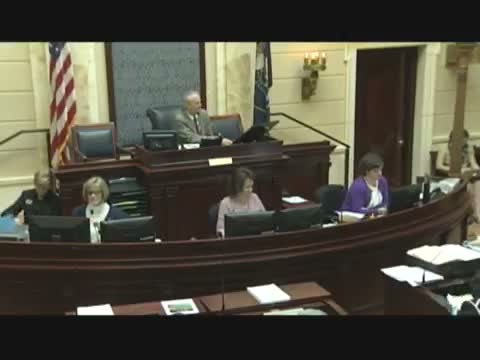
Senator Adams introduced First Substitute House Bill 155 on the Senate floor, proposing the Utah Communications Authority (UCAN) to consolidate statewide public‑safety radio systems and the statewide 9‑1‑1 committee under a single authority. "The goal of 155 is to put all of the state's local government public safety communications organizations together under one umbrella," Adams said during his presentation.
The bill would move responsibility for the statewide nine‑one‑one committee from the Department of Public Safety to UCAN and establish a board including representatives from DPS, UDOT, Corrections, Health, the National Guard and local users. Adams said an amendment in his name (Amendment 2) requires evaluators to assess benefits, costs, and existing facilities as UCAN is developed.
Senators questioned the fiscal note and the practical effect on local dispatch centers and PSAPs. Senator Valentine asked whether the fiscal note effectively moves $3,000,000 from the existing 9‑1‑1 system into the UCAN fund; Adams replied, "Yes. That's exactly what it's doing," and added there is an appropriation in this year’s budget intended to replace funds going to poison control.
Supporters stressed the potential to create a grant pool that local or state entities could request from to improve infrastructure in underserved areas, while some rural senators urged protections so valuable existing local equipment is evaluated rather than replaced automatically.
The Senate agreed to amendments and then moved HB155 to third reading; the clerk recorded final passage on the floor at 29 yea, 0 nay, 0 absent when the bill was sent to the House for the speaker’s signature.