Get Full Government Meeting Transcripts, Videos, & Alerts Forever!
Get email alerts on the Legislative Activity topic
No spam. Unsubscribe anytime.
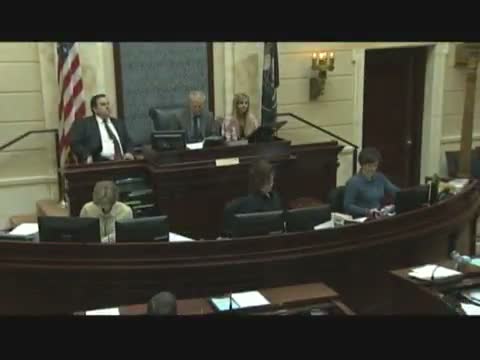
Utah Senate advances a slate of bills on Day 30, including education, public‑meeting and lien reforms
Summary
On Day 30 the Utah Senate adopted dozens of measures: bills on capital improvements, public‑meeting materials, rural health funding, drowsy‑driving awareness, and measures to address wrongful common‑law liens all advanced or passed. Several bills passed unanimously or with large majorities.
The Utah Senate convened for Day 30 and moved a wide set of measures across the calendar, voting to pass or advance bills that span education, transportation, open‑meeting rules, rural health funding and remedies for fraudulent liens.
Senators approved Senate Bill 172, a capital improvement package that, according to sponsor Senator Harper, "maintains the capital improvement fund at 1.1%" and limits phased funding in order to prioritize maintaining existing facilities rather than expansions. After floor explanation the bill passed by a large margin and was sent to the House.
The chamber also approved a package of bills affecting government transparency and records. Senator Henderson described second substitute Senate Bill 169 as requiring a presenter who provides electronic material at an open meeting to also supply an electronic or hard copy; she clarified that "only documents that document the actual actions taken in a public meeting are permanent" and that other materials have a shelf life. The bill passed on the floor.
On public‑safety and awareness, Senator Osmond presented first substitute Senate Bill 149 to establish an August drowsy‑driving awareness week, saying public education about the risks of drowsy driving is needed because they "are equal to, if not greater than sometimes, the impacts of drinking while under the influence of alcohol." The chamber approved the measure.
Rural health and local funding were the subject of Senate Bill 176, described by Senator Okerlund as allowing small communities and service districts to use approved local sales‑tax proceeds to operate nursing care facilities in a manner similar to county ownership. The Senate passed the bill and it was transmitted to the House.
A significant policy discussion centered on House Bill 16, which targets nonconsensual common‑law liens and wrongful filings. Senators described instances of fraudulent liens filed against multiple counties and private property. Senator Van Tassel and others recounted that such liens can appear on title reports and make financing or sale of property difficult; the sponsor clarified the measure has prospective application. Multiple senators voiced support for giving county recorders and courts tools to require adjudication and to impose liability on wrongful filers. The chamber moved HB 16 to third reading for final action.
Other legislative actions of note included amendments to scrap‑metal laws to include refiners under Senate Bill 92, adjustments to tax and property collections under Senate Bill 180, licensing and pharmacy administration changes under first substitute Senate Bill 55, and charter‑school enrollment clarifications under House Bill 36.
Procedurally, the Senate adopted standing committee reports and handled a series of "circle/uncircle" and recall motions (including a motion to recall Senate Bill 173 from the House so committee amendments could be re‑incorporated). Several bills were tabled or circled where sponsors noted pending fiscal notes or amendments that needed further attention.
What happens next: Most of the bills the Senate passed on Day 30 were sent to the House for consideration, while others were set for further Senate action (tabling or returning for amendment). The Senate recessed until 2:00 p.m. for its next session.
Votes at a glance (selected, roll‑call tallies as recorded on the floor): - Senate Bill 172 (capital improvement): recorded as passing with a strong majority and sent to the House. - Senate Bill 149 (drowsy driving awareness week): passed on floor action. - Senate Bill 171 (Student‑Centered Learning Pilot): recorded as 21 yea, 5 nay, 3 absent; passed. - Senate Bill 84 (Governor's Rural Partnership Board amendments): recorded as 26 yea, 0 nay, 3 absent; passed. - Senate Bill 169 (public meetings materials): recorded as 26 yea, 0 nay, 3 absent; passed. - Senate Bill 176 (local funding for rural healthcare): recorded as 27 yea, 0 nay, 2 absent; passed. - Senate Bill 92 (scrap metal/refiners): recorded as 26 yea, 0 nay, 3 absent; passed. - First substitute Senate Bill 180 (property tax modifications): recorded as 22 yea, 3 nay, 4 absent; passed. - House Bill 36 (charter school enrollment): recorded as 25 yea, 1 nay, 3 absent; passed. - House Bill 264 (disabled‑parking fine amendments): recorded as advancing and read for a third time with recorded support.
Direct quotes in this summary are taken from floor remarks recorded on the Senate floor and attributed to sponsors or speakers who spoke on the record.
No formal vetoes or final gubernatorial actions were part of this day's floor record; most measures move next to the House or to subsequent Senate steps for further action.