Get Full Government Meeting Transcripts, Videos, & Alerts Forever!
Get email alerts on the Environmental Regulation topic
No spam. Unsubscribe anytime.
Senate passes bill limiting medical-waste incineration within two miles of neighborhoods after heated Stericycle debate
Summary
The Utah Senate passed first-substitute SB 196, which bars incineration of infectious medical waste and chemotherapy drugs within a two-mile radius of residentially zoned areas; the sponsor framed the measure as a narrow public-health buffer amid questions about DEQ capacity and Stericycle’s compliance history.
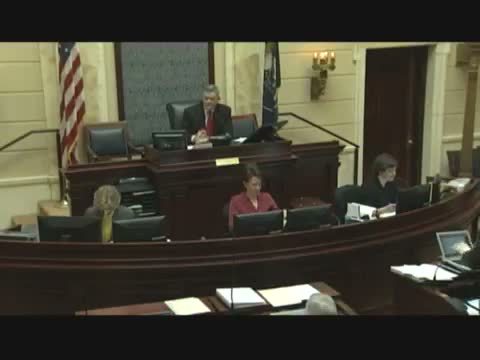
The Utah Senate on the floor passed first-substitute SB 196, a bill that would prohibit incineration of infectious medical waste and chemotherapeutic agents within two miles of residentially zoned areas.
Sponsor Senator Weiler described the measure as “very limited in scope,” intended to prevent a repeat of the situation involving Stericycle, a medical-waste processor near a subdivision. He told colleagues that the bill “would allow [Stericycle] to move, just would not allow them to move within 2 miles of a residential neighborhood.” The sponsor also told the Senate, “My bill does not provide any state money or any support or assistance at all for a move.”
Senators debated several practical and regulatory questions: whether the bill would block hospitals from burning certain waste on-site, whether existing facilities could seek renewals, and whether Utah’s Department of Environmental Quality (DEQ) and Division of Air Quality (DAQ) have capacity to investigate and enforce violations. The sponsor said the bill uses a Jan. 1 lock-in date to protect existing operations while blocking new or relocated facilities from locating within the two-mile buffer.
Opponents and supporters offered contrasting views on whether the measure goes far enough. One senator noted that Stericycle has been cited and faces civil and criminal investigations; the sponsor echoed that enforcement action is underway and said, “I have every reason to believe that criminal charges will be filed.” Another senator cautioned that some infectious wastes and chemotherapy agents require specialized disposal and that remote, properly permitted facilities will remain able to operate.
The Senate recorded a roll-call result sending the substitute to third reading with 19 yea votes, 5 nay votes and 5 absent; the President ordered the bill read for the third time. Sponsor statements made clear the bill’s intent: to limit location-based incineration of the most hazardous medical wastes near residential neighborhoods while allowing existing, properly sited facilities to continue under current permits.
Next steps: the measure will proceed to third reading on the Senate calendar, after which it may be sent to the House for concurrence or further action.