Get Full Government Meeting Transcripts, Videos, & Alerts Forever!
Get email alerts on the Criminal Justice topic
No spam. Unsubscribe anytime.
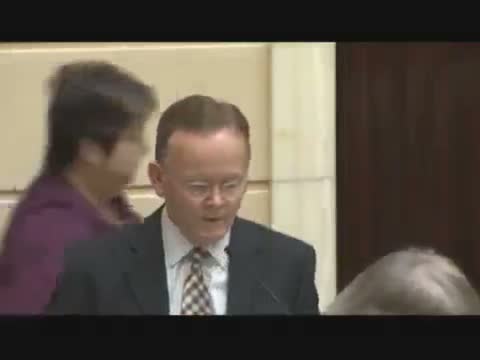
Senate Advances DNA-Collection Amendments After Testimony, Read for Third Time
Summary
Senators advanced House Bill 212, clarifying DNA-collection procedures at booking following court guidance; sponsor cited Elizabeth Smart’s testimony and law-enforcement benefits; the Senate recorded 23–2 in favor to read for a third time.
The Utah Senate on March 5 advanced House Bill 212, a measure amending DNA-collection procedures to align with recent court decisions and to clarify when samples may be collected and processed.
Senator Adams, presenting the bill, said the legislation responds to a Supreme Court ruling and permits DNA collection at booking for serious crimes while preserving safeguards: collected DNA would be held until probable cause exists before processing and there is a statutory procedure to expunge information if an arrestee is found not guilty.
The sponsor referenced testimony from Elizabeth Smart in support of broader collection, saying expanded DNA databases have led to hits that identified perpetrators in other states years after crimes occurred. Adams argued the measure has proven utility in solving serious crimes and protecting public safety.
Several senators raised due-process concerns. Senator Harper used his explanation of vote to articulate worries about escalating penalties (citing examples of felony-for-second-offense conduct) and the difficulty of removing DNA records for individuals not convicted. Despite those concerns, the Senate ordered the bill read for a third time and recorded a roll-call tally of 23 'aye', 2 'nay' and 4 absent.
The bill has a fiscal note, which the sponsor acknowledged before moving for third-reading consideration. The Senate also discussed implementation procedures and the relationship between booking collection and probable-cause review.
Senators indicated they would consider fiscal and procedural follow-ups as the bill moves toward final steps.