Get Full Government Meeting Transcripts, Videos, & Alerts Forever!
Get email alerts on the Consumer Protection topic
No spam. Unsubscribe anytime.
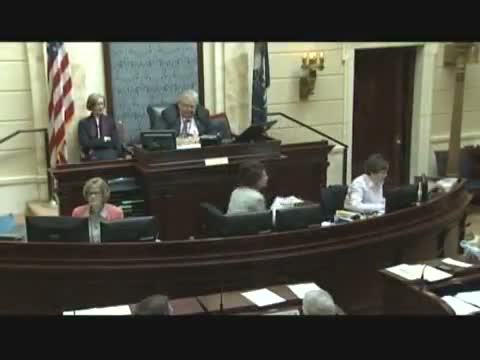
Senate passes HB127 to alter payday lending terms, add underwriting and venue protections
Summary
The Utah Senate passed HB127, revising consumer-lending rules to require an extended-payment option after 10 weeks, underwriting of loans, mandatory default notices, reporting to state regulators and a prohibition on venue-shopping by lenders.
The Utah Senate on March 4 passed House Bill 127, a package of consumer-lending changes aimed at reducing the cycle of repeat short-term loans. Sponsor Senator Bramble told colleagues the bill creates seven key changes, most notably an option that allows borrowers at 10 weeks from loan origination to repay any unpaid balance “without interest over the next 60 days.”
Why it matters: Supporters said the measure will reduce the common practice of borrowers rolling payday loans into new loans and facing escalating fees. Bramble said the bill also imposes mandatory underwriting, clearer consumer disclosures and reporting requirements to the Department of Financial Institutions.
Debate and key claims: Senator Dabakis called attention to reported effective annual rates and said, “the Utah state reporting requirement has some loans at 1580%.” Bramble responded that HB127 “does not impose usury fees” and that comparisons of short-term charges to annual percentages can be misleading because they convert short-term fees and bank penalties into an annualized number. Dabakis and others said the state should consider stricter statutory caps in future sessions; Dabakis said the average loan is closer to 467% and called for further reform.
Sponsor explanation and technical provisions: Bramble walked senators through the bill’s provisions, including (1) an extended-payment option after 10 weeks allowing interest-free repayment over 60 days, (2) mandatory notice of default to reduce unnecessary court actions, (3) underwriting and ability-to-pay analysis required of lenders, (4) consumer acknowledgment of terms, (5) prohibitions on venue-shopping by lenders, and (6) additional reporting to the Department of Financial Institutions. Bramble said the changes were negotiated with industry stakeholders and committee opponents.
Questions from colleagues: Senator Jones and others asked for plain-language clarifications about what documentation is required to take a payday-style or deferred-deposit loan. Bramble pointed the chamber to the bill text requiring written proof of income verification and lender records for prior repayment history.
Vote and next steps: After extended debate, the Senate recorded a roll call and passed HB127 (recorded result in the transcript: 26 yays, 0 nays, 3 absent as stated when the bill passed for final reading). The bill will proceed back to the House as required by interchamber procedure for concurrence or signatures.
Closing note: Sponsors and backers framed the bill as a regulatory and disclosure improvement rather than a statutory interest-rate cap; several senators said further work on capping effective rates may be considered later.