Get Full Government Meeting Transcripts, Videos, & Alerts Forever!
Get email alerts on the Nonprofit Transparency topic
No spam. Unsubscribe anytime.
Utah Senate advances dozens of bills; motion to reconsider leads to extended debate and passage of nonprofit oversight language
Summary
The Utah Senate passed multiple bills on the consent and third-reading calendars and voted to reconsider an amendment to House Bill 283 that sparked a lengthy floor debate over nonprofit accountability; the chamber ultimately passed a revised bill and sent it to the House.
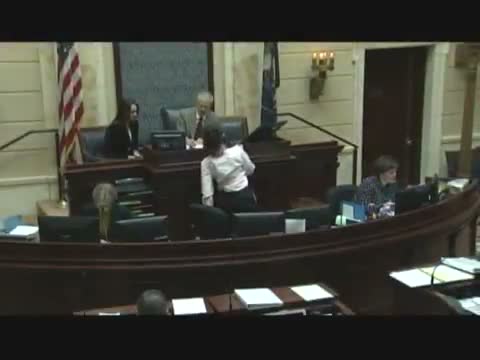
SALT LAKE CITY — The Utah Senate moved a long list of bills through the chamber Tuesday morning, approving dozens on the consent and third‑reading calendars and engaging in a heated floor debate over a nonprofit oversight amendment that required a formal motion to reconsider.
The session opened with an invocation and the Pledge of Allegiance before President Niederhauser declared a quorum. Early business included communications from the House and a series of standing committee reports that were adopted and placed on the consent calendar. Several House bills — including HB 321 (Refugee Services Coordination Amendments) — were considered and approved by the Senate. Senator Jones moved for passage of HB 321, which the Senate approved 26‑0 with three absent, sending the bill back to the House for the speaker’s signature.
Why it mattered: The chamber’s most consequential debate of the morning focused on Third Substitute House Bill 283, dealing with state oversight of nonprofits that receive government funds. Senator Bramble successfully moved to reconsider an amendment (amendment #3) that had been added after committee action; proponents and opponents spent significant time arguing whether the amendment belonged in a bill whose primary purpose the sponsor said was financial oversight.
Senator Bramble argued the floor needed to correct a procedural misunderstanding and keep the bill’s financial‑integrity focus. “This bill is about bringing financial integrity to those who receive grants,” Bramble said. Opponents, including Senator Robles (the floor sponsor for the amendment), countered that the provision would require nonprofits receiving more than $500,000 in state funds to comply with non‑discrimination standards already used in state government. Robles said the amendment did not impose a new burden but instead would “include our current standards” in statute for entities receiving substantial taxpayer dollars.
The motion to reconsider passed on a roll call after floor debate (22 yays, 5 nays, 2 absent). The Senate then debated the merits of the bill without the contested amendment and later passed Third Substitute HB 283 by roll call (28 yays, 0 nays, 1 absent); the bill was sent to the House for further consideration.
Votes at a glance - HB 321 (Refugee Services Coordination Amendments): Passed 26‑0, 3 absent. The bill gives DWS limited rulemaking authority to extend certain services beyond an eight‑month limit for emergency needs and victims of domestic violence. (Sen. Jones) - SB 203 (Immigration amendments): Passed 22‑0, 7 absent. The bill defers effective dates for two immigration statutes to July 1, 2017, pending federal action. (Sen. Bramble) - Third Substitute HB 283 (Nonprofit entity receipt of government money): Passed 28‑0, 1 absent after a successful motion to reconsider amendment #3 and extended floor debate. (Sen. Bramble; amendment maker Sen. Robles argued for additional statutory standards) - HB 92 (Utah and Telehealth Network amendments): Passed 23‑0, 6 absent; merges Utah Education Network and Telehealth Network to reduce costs and improve coordination. (Sen. Christensen)
What was contested: The central disagreement on HB 283 concerned whether adding statutory non‑discrimination requirements for nonprofits that receive more than $500,000 in state funds was a financial‑oversight measure or a policy change that deserved separate consideration. Senator Bramble said the amendment was not appropriate to the bill’s core purpose and that adopting it risked losing the underlying bill. Senator Robles said the amendment simply codified standards already applied to state entities and was reasonable for organizations handling substantial taxpayer money.
Other floor action: The chamber handled a series of other bills on the agenda with limited debate, including measures on law‑enforcement volunteer authority, a trustee foreclosure amendment, sales‑tax changes affecting municipalities, and updates to concealed‑weapon permit authority for certain officials. Announcements and gallery recognitions followed before the Senate recessed until 2 p.m.
The next procedural step for bills the Senate approved is transmittal to the House (for bills originating in the Senate) or signature and enrollment as appropriate; several items were recorded as sent to the House for the speaker’s signature.
Sources: Utah Senate floor session transcript (floor remarks, roll calls and formal motions).