Get Full Government Meeting Transcripts, Videos, & Alerts Forever!
Get email alerts on the Health Insurance topic
No spam. Unsubscribe anytime.
Senate advances autism-coverage mandate after lengthy floor debate
Summary
The Utah Senate advanced Senate Bill 57, a measure requiring private insurers to cover intensive behavioral interventions for autism, after hours of testimony over costs, scope and alternatives; the bill moved toward third reading following a 18-8 roll-call.
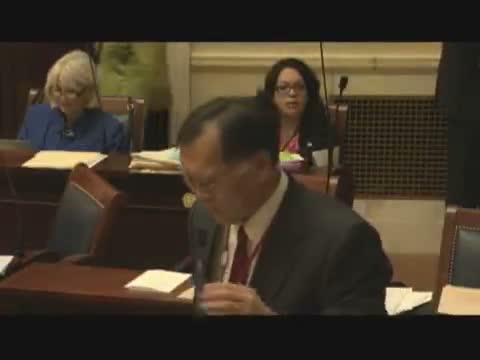
Senator Shizawa moved the Senate to consider Senate Bill 57, a measure asking private insurers to cover intensive behavioral interventions for children with autism, arguing the coverage would give “children and their family…a voice” in negotiations with insurers. The chamber debated the bill extensively before calling the question and moving it toward third reading.
Supporters framed the bill as a narrowly tailored health-insurance mandate for an evidence-backed therapy. “When this works…these children can be mainstreamed,” said Senator Stevenson, urging colleagues that early treatment can reduce long-term public costs. Senator Robles and others described personal encounters with families who sold assets or took second jobs to pay for therapy and said expanded coverage could reduce special-education costs in K–12 systems.
Opponents warned of the fiscal impact of a mandate on insurers and policyholders and urged alternatives such as Medicaid expansion or other state funding mechanisms. Senator Christensen said the cost would be shared by all citizens through insurance premiums and said he would vote no on principle. Senator Dayton explained his no vote as a budgetary concern, saying opposition was not opposition to autistic people but to mandating new costs without a clear financing plan.
Sponsor Shizawa said he had met with major insurers and would work to negotiate details on ages, caps and service dates; he described the bill’s scope as narrow and focused on therapies supported by clinical evidence. After debate, the Senate recorded a roll-call on the question to read SB 57 for third reading; the clerk announced the bill had received 18 yes votes, 8 no votes and several absences, and it was advanced toward third reading.
Next steps: the bill is set for a third-reading roll call where sponsors and opponents can offer final points before final passage or referral back for amendment.