Get Full Government Meeting Transcripts, Videos, & Alerts Forever!
Get email alerts on the Transportation topic
No spam. Unsubscribe anytime.
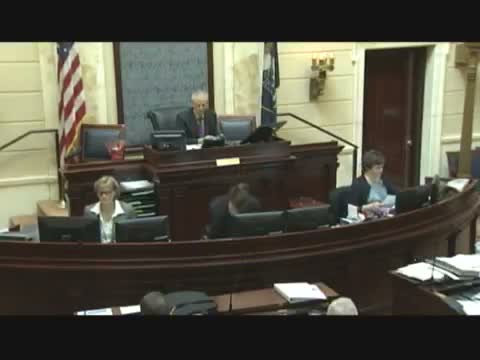
Senate approves HB 80 to expand 80 mph pilot on qualifying Utah roads
Summary
The Utah Senate approved House Bill 80 to allow transportation officials to designate qualifying stretches of road for 80 mph limits after engineering and safety study; vote was 23–4 with 2 absent. Lawmakers pressed sponsors on safety reviews, Highway Patrol involvement and seat-belt enforcement.
The Utah Senate on Wednesday voted to advance House Bill 80, a measure that expands the state's pilot program allowing 80 mph speed limits on qualifying road segments. Senator Jenkins, the bill's sponsor, said the change lets local traffic engineers and the Utah Department of Transportation extend test areas statewide where engineering and safety studies support the higher speed.
"This is one of the funnest bills I get to run all year," Senator Jenkins said, arguing that test-area data showed accidents fell in some places and that "people drive at a speed they feel safe at." Jenkins said the change requires an engineering and public-safety study before a segment may be raised from 75 to 80 mph.
Opponents and questioners focused on safety oversight. Senator Robles asked whether roads would be tested or rebuilt to handle sustained 70-plus speeds; Jenkins replied that the highway traffic engineering and state safety study accompanying any designation would address those concerns. Senator Davis asked whether the Highway Patrol and the Department of Public Safety would be involved; Jenkins said DOT sets traffic by code and that the safety review is part of the process.
Senator Weiler noted that the state already has a mandatory seat-belt law and said that factored in his "yes" vote: "It's just whether or not you can be cited as a primary offense," he said. Several senators urged careful adherence to the engineering and safety studies and limited application to non-dense, straight roadway sections.
After floor debate and several brief explanations, the Senate moved HB 80 to third reading. The chair announced the count as 23 yea, 4 nay and 2 absent.
Why it matters: If implemented, HB 80 lets DOT and local traffic engineers authorize higher speed limits on segments that meet engineering and safety criteria, shifting responsibility for designation to agencies that must document road suitability and public-safety analysis.
Next steps: The measure was read for a third time on the floor and advanced per the announced vote tally; subsequent administrative designations will require the engineering and safety studies the bill references.