Get Full Government Meeting Transcripts, Videos, & Alerts Forever!
Get email alerts on the Education Funding topic
No spam. Unsubscribe anytime.
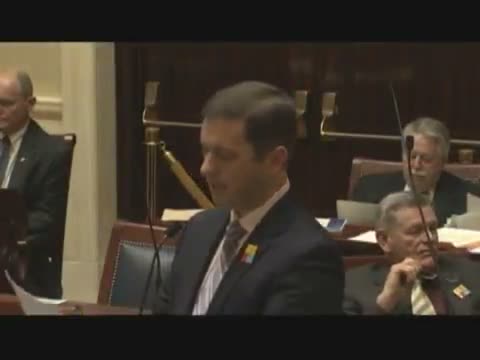
Senate debates plan to equalize local school property-tax revenue; sponsor circulates bill for more work
Summary
Senators extensively debated a plan (first/second-substitute SB111) to fix the state basic levy and funnel new revenue into a capped 'growth account' that would be equalized to districts. Sponsor said an amendment reduced estimated near-term revenue from about $44 million to roughly $12 million and the bill was circled for more review.
Senator Derek Osman introduced a substitute to Senate Bill 111 on Feb. 24, proposing to fix Utah’s state basic levy so that rising property values generate new revenue that would be placed in a growth account and redistributed to school districts on a per‑student basis.
Osman said the plan is meant to address sharp local differences in property‑tax revenue per student, pointing to examples where Park City generates roughly $8,000 per student while some districts generate near $1,000. "As property values increase, the rate drops so that it's revenue neutral. My proposal is let's fix that rate," Osman said, adding that new revenue would be equalized back to districts and capped at $100,000,000.
The context: the bill aims to target operations (M&O) money, not capital funding. Osman and supporters said the approach would give local community councils more direct control over spending while still requiring school‑level improvement plans and oversight by local boards. Sponsor and colleagues described the bill as a way to bring new resources to underfunded districts without taking existing local dollars from other districts.
Lawmakers pressed specifics. Senator Hillier asked whether the fiscal note changed with amendments; Osman said yes, noting the revenue figure in the bill dropped from an estimated $44,000,000 to about $12,000,000 under Amendment 2. On allocation, Osman confirmed that 25% of district shares would be distributed equally across that district’s schools and 75% would be directed "based on school need," subject to a local school board decision and the community council’s approved school improvement plan. Senator Valentine asked whether the fund would follow the School and Institutional Trust Lands Administration model; Osman said it would be a separate growth account administered under similar statutes.
Senator Harper’s Amendment 4, adopted in committee and debated on the floor, emphasized that new money should "go into the classroom to enhance and improve academic performance" and urged priorities such as staffing, technology and professional development.
After extended discussion, Osman said he intended to circle the bill for further work and consultation with colleagues and staff. "It is my intent to circle this legislation ... and I'll invite my colleagues to please come and talk with me and discuss any concerns that they have," he said. The bill was circled for follow‑up rather than advanced to final passage.
What’s next: Sponsor said the legislation will be revisited after additional discussions and fiscal analysis; he asked colleagues to meet with him before the bill returns to the floor.