Get Full Government Meeting Transcripts, Videos, & Alerts Forever!
Get email alerts on the Federalism And Budget topic
No spam. Unsubscribe anytime.
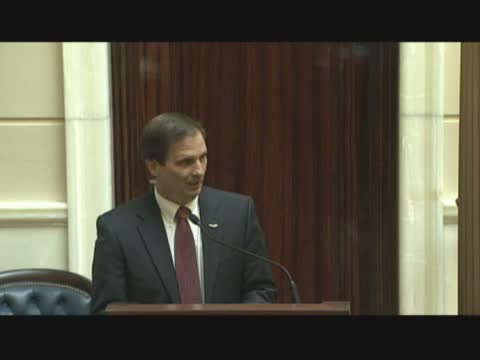
U.S. Rep. Chris Stewart tells Utah Senate federalism should empower states, flags ACA and budget as defining issues
Summary
Congressman Chris Stewart told the Utah Senate he favors shifting power to state governments, described the Affordable Care Act rollout and last year’s government shutdown as pivotal events, and said recent budget agreement removed the risk of a federal default.
U.S. Rep. Chris Stewart addressed the Utah State Senate in a time‑certain appearance, urging a return of certain powers to state governments and framing the Affordable Care Act rollout, last fall’s government shutdown and the recent budget agreement as defining events for federal politics.
Stewart opened by praising Utah’s governance and said he believes in ‘‘the idea of federalism,’’ arguing many problems are “best addressed at the state” level. He described three events that changed Washington’s operating environment: the government shutdown, difficulties with the Affordable Care Act rollout, and passage of a budget agreement that removed the immediate threat of default. "For example, there's broad bipartisan support for this idea of letting children stay on their parents' health care till they're 26," he said while arguing there are alternative fixes to some ACA problems.
Nut graf: Stewart framed his congressional priorities around pragmatic governance and congressional reform. He noted his committee assignments — including an appropriations role — and said he sees opportunities to curb excesses and make federal funding and programs work more efficiently with state partners.
The presentation drew questions from senators. Senator Osman commended Stewart’s assignment to the Appropriations Committee and said the appointment ‘‘reflects the respect of his peers.’’ Stewart described the committee historically as an avenue for earmarks but said his goal is reform: "I think that we have a new day in the Appropriations Committee, and that is it's a committee that can reform, and that can help control some of the excesses that we've seen in the past." (Question by Senator Osman)
Senator Dabakis raised concerns about fundraising and the role of ‘‘dues’’ in committee leadership selection. He said the practice — perceived or real — worries him: "If you wanna become chair of an important committee, you have to pay dues." Stewart replied that he has not donated campaign funds to national party committees and said personal fundraising does not necessarily determine committee assignments: "I didn't buy my way onto [a] committee. In fact, just the opposite." (Exchange between Senator Dabakis and Congressman Stewart)
On air quality, prompted by Senator Robles, Stewart said he sympathizes with Utahns harmed by poor air and encouraged state‑level solutions: "If you want to fix air quality in the Salt Lake Valley, then tear down these mountains and convince the jet stream to come 300 miles further south," he said rhetorically to illustrate geographic constraints, while adding the federal delegation will support state efforts.
Stewart closed by reiterating his respect for state leadership and saying he welcomes opportunities to return some authority to states where appropriate. The Senate recessed briefly to the Committee of the Whole for the appearance and then returned to regular business.
Next steps: Stewart's remarks were a floor address with no formal action attached; several senators signaled continued interest in collaborating on appropriations and federal support for state priorities.