Get Full Government Meeting Transcripts, Videos, & Alerts Forever!
Get email alerts on the Infrastructure Tax Policy topic
No spam. Unsubscribe anytime.
Senate advances MITA bill after heated debate over utility-tax exemption for large data center
Summary
The Utah Senate moved first substitute Senate Bill 45 to the third-reading calendar after hours of debate over whether the Military Installation Development Authority should be able to waive local utility franchise taxes for a roughly 1.6-million-square-foot federal data center; supporters cited commitments made during negotiations, while opponents said no written agreement was produced and estimated the waiver could forgo about $6 million a year.
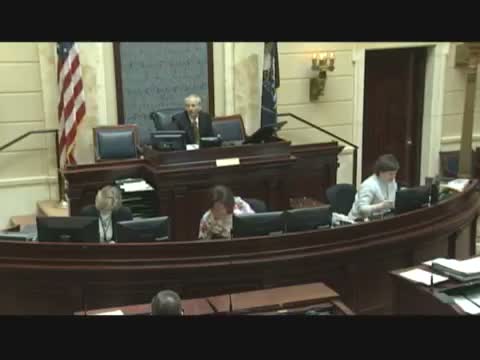
The Utah Senate on Feb. 7 advanced first substitute Senate Bill 45, a package of amendments to the Military Installation Development Authority (MITA), to the third-reading calendar after extended debate over tax exemptions for development on or adjacent to military property.
Sponsor Senator Jay Stevenson, who described the measure as containing five components, said the bill clarifies development definitions, authorizes certain privilege (franchise) tax provisions, and implements an exemption that would honor earlier commitments tied to bringing a large federal data center to Utah. Stevenson said the legislation "ties Wasatch Integrated Waste" energy facilities to base development, clarifies who may be taxed and when, and "brings the state of Utah to our commitment." (Senator Jay Stevenson, sponsor.)
Opponents pressed the sponsor repeatedly on the scope and fiscal effect of a provision that effectively waives a local utility franchise or energy tax for the project. Senator DeBackus asked whether the proposal amounted to a "subsidy to the federal government," and noted concerns that the project "creates very few jobs" while potentially forgoing local tax revenue. (Senator DeBackus.) Senator Bramble and others asked for documentary proof of any prior written commitment; sponsor Stevenson said negotiations with the governor's office and institutional memory formed the basis of the commitment but that no single piece of paper had been produced during floor debate. (Senator Jay Stevenson.)
Senators repeatedly identified the project as large — the sponsor said it involves about 1,600,000 square feet — and estimated lost revenue in the millions of dollars annually if the franchise/utility tax were waived. Senator Stevenson stated that "the utility tax, if it were charged, would bring into MITA approximately $6,000,000 a year." (Senator Jay Stevenson.) Senator Dabakis characterized the waiver as significant and said, "The Fed spent a billion dollars for the [data center] here. We get very little out of that… The least they can do is drop off $6,000,000." (Senator Dabakis.)
Other senators raised governance and fairness questions. Senator Hilliard and Senator Madsen contrasted the proposed treatment with other tax-exempt arrangements (for example, university research parks), and asked whether local cities such as Clearfield or Roy would lose franchise-tax revenue or local control. Sponsor Stevenson and others explained that MITA has specific statutory authority to levy franchise taxes on projects within its jurisdiction and that revenues would be directed by the MITA board, which may share proceeds with local governments. The sponsor said the move was meant to honor negotiated commitments and to preserve the state's ability to finalize the project.
Senator Dayton said he would not support the bill unless lines concerning the franchise/energy tax (lines 278–285 in the draft discussed on the floor) were removed or further discussed with affected cities. Senator Harper and others urged adherence to commitments made during negotiations, while some senators said they were uncomfortable approving a tax waiver without a written agreement.
Following debate and several requests for clarification, the Senate recorded a roll-call vote moving the first substitute for SB 45 to the third-reading calendar with 22 yea and 7 nay votes. Multiple senators registered misgivings or requested further explanation from the sponsor, and at least one senator, Reid, said he voted "aye" partly because he believed there may be an obligation based on prior commitments but requested further explanation to the body later. (Senator Reid.)
What happens next: moving to third reading does not itself enact the statutory changes; it places the bill later on the calendar for final floor consideration, where final passage would be decided. Supporters said the bill is necessary to honor recruitment/placement commitments; opponents said the waiver shifts millions in potential local franchise revenue and requested more documentation and local consultation before final approval.
Sources and limits: floor debate included multiple numerical estimates and references to prior negotiations. Sponsor Stevenson acknowledged he had "not been able to be provided with any piece of paper" that memorialized the commitment to waive certain taxes, and opponents urged caution. The article reports those statements as attributed floor testimony; it does not assert the existence of any written agreement beyond what senators stated on the record.
Next steps: The bill is scheduled for third reading; further amendments or clarifying language could be introduced before any final vote.