Get Full Government Meeting Transcripts, Videos, & Alerts Forever!
Get email alerts on the Environment topic
No spam. Unsubscribe anytime.
Air-quality penalty and statute-of-limitations bill fails after floor split
Summary
SB 208, proposing higher civil penalties under the Air Conservation Act and a five-year statute of limitations for enforcement, drew extended debate over DEQ incentives and implementation before failing on a roll-call vote (12–14).
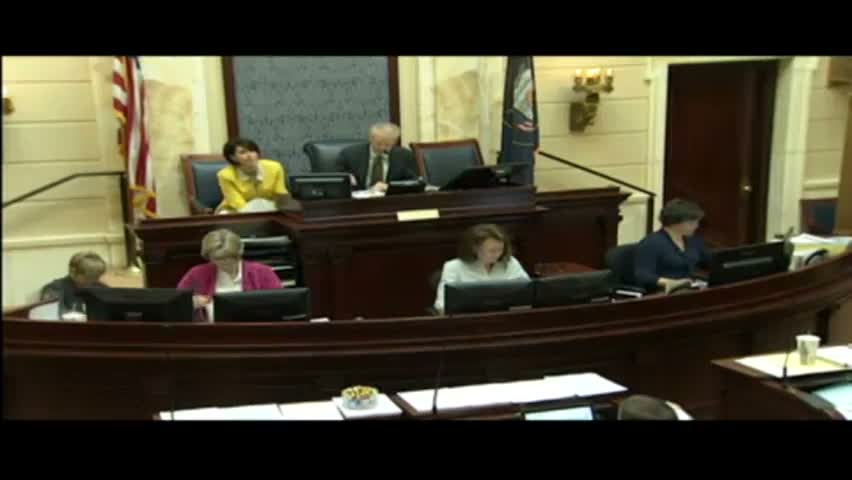
Sen. Escamilla presented SB 208, a bill that would increase civil penalties under the Air Conservation Act and extend the statute of limitations for environmental-quality violations from one year to five. He said penalties and the longer limitation would give the Department of Environmental Quality (DEQ) "an extra tool" to enforce existing law and to reflect penalty levels used in other states.
After floor questioning, Escamilla offered an amendment removing language that would have dedicated a percentage of penalty revenue to remediation efforts; he said the penalty funds would instead go to the general fund. Several senators voiced concern that higher penalties and funneling funds to remediation could create incentives for over-enforcement. Senator Dayton asked whether the amendment clarified the destination of collected penalties; Escamilla replied the money would go to the general fund.
Opponents stressed uncertainty about DEQ staffing and inspection cycles and questioned whether the bill was appropriately targeted. Senator DeBackus urged the body to consider whether the bill was "tough on the right actors" and noted inspection cycles that can be four years apart.
After amendment and debate, members called for suspension of the constitutional third-reading requirement and proceeded to a roll-call final passage vote under suspension of the rules. The roll-call recorded 12 yeas, 14 nays and 3 absences; SB 208 failed and was sent to staff for filing.
What happens next: With the bill failing on the floor, sponsors said they will continue to pursue enforcement tools and may revisit statutory and implementation changes with DEQ in future sessions or committee work.
Source: Floor debate by Senator Escamilla and recorded roll-call vote.