Get Full Government Meeting Transcripts, Videos, & Alerts Forever!
Get email alerts on the Transportation Funding topic
No spam. Unsubscribe anytime.
Senate passes sweeping transportation funding package, converting gas tax to percentage and adding local option
Summary
The Utah Senate passed HB 362, a comprehensive transportation funding package that converts the state's fixed cents-per-gallon gas tax to a percentage (12%) with a floor and ceiling and authorizes a local-option transportation sales tax; passage followed extended debate over tax structure and rural impacts.
The Utah Senate voted to pass House Bill 362, a multi-part transportation funding package that would convert the state's fixed gasoline excise tax into a percentage-based tax and create a local-option transportation sales tax.
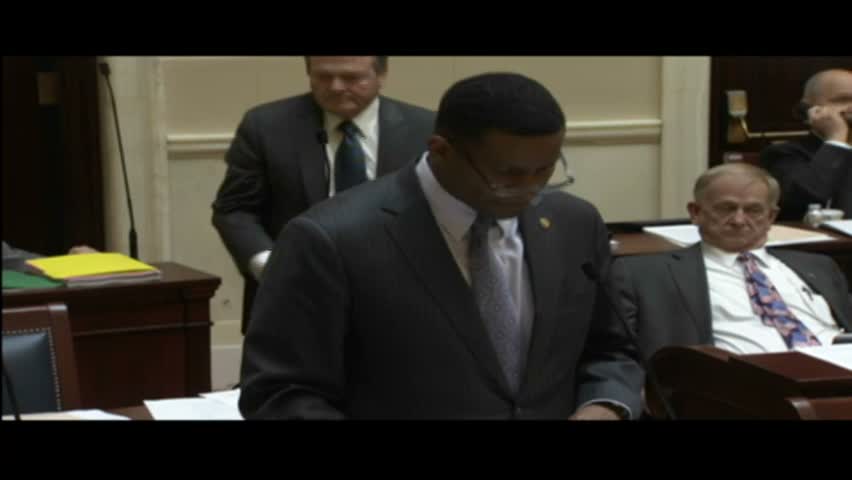
Sponsor Senator Mark Jackson told colleagues the measure would "convert the current 24 and a half cents per gallon gas tax to a 12% tax," beginning Jan. 1, 2016, with protections against runaway price swings by setting a floor roughly equivalent to current cents-per-gallon revenue and capping the tax at 40' per gallon. The bill also authorizes local communities to adopt a transportation sales tax (0.25 percentage point) with specified splits to transit, cities and counties in Class 1 and 2 counties.
Jackson framed the bill as a response to a multi-decade revenue shortfall, saying the state faces an "$11,000,000,000 shortfall over a 20 year period" for transportation and that the change would stabilize buying power lost since the tax last changed in 1997. He said the proposal also includes vehicle registration fee changes for electric and hybrid vehicles and limits on how revenue can be used so funds "may not be used to supplant existing general fund appropriations" for transportation.
Not all senators supported the approach. Senator Howard Stevenson rose "in opposition to this tax increase," calling the switch from a user-based gas tax to a percent-based sales tax the "wrong direction" and warning that the proposal amounts to a sales-tax increase that could encourage jurisdictions to expand retail boundaries to capture revenue. "In a year when we have nearly $800,000,000 in surplus, the people are wondering why are we increasing taxes," Stevenson said.
Other senators argued the bill was imperfect but necessary. Senator Weiler, who represents multiple cities with urgent B- and C-road needs, said he would "plug my nose a little bit and vote for this bill" to secure maintenance funding, while Senator Van Tassel and others emphasized rural protections, a ceiling on the tax, and distribution formulas to address both urban transit needs and rural road maintenance.
After extended floor debate and numerous procedural motions, the Senate recorded passage and prepared to return the measure to the House for further consideration.
The next steps: as with most revenue bills, the House must consider any Senate changes or the bill may go to conference committee for final reconciliation.