Get Full Government Meeting Transcripts, Videos, & Alerts Forever!
Get email alerts on the Education topic
No spam. Unsubscribe anytime.
Senate codifies parental-consent requirement for human sexuality instruction; bill advances
Summary
Second Substitute House Bill 447 would require prior written parental consent before schools provide human sexuality instruction; sponsors said the bill codifies current opt-in practice and requires reasonable alternatives for nonparticipating students; senators debated implementation and health implications before advancing the bill.
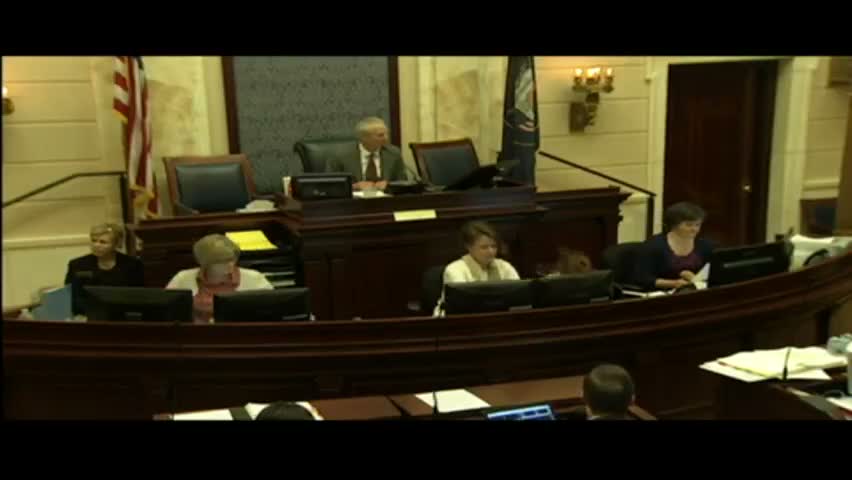
At a time-certain the Senate debated Second Substitute House Bill 447, which requires schools to obtain prior written parental consent before providing human sexuality instruction.
Senator Adams, the floor sponsor, said the bill would codify existing State Board policy into statute and make explicit that written consent is required before a school may provide such instruction (presentation and clarification at SEG 3872–3944). Adams told colleagues the bill excludes required instruction addressing child abuse and other statutory exceptions and that the intention is to memorialize the current opt-in practice rather than change it.
Senators asked several implementation questions: whether the bill actually changes the current opt-in/opt-out practice (sponsor and others clarified it codifies opt-in), what reasonable alternatives schools must provide for students whose parents do not consent, and whether lack of instruction could have public-health consequences (exchanges at SEG 3928–3980, 4032–4050, 4076–4112). Senator Escamilla and others pressed for definition and guidance on what the 'reasonable alternative' would be to ensure students are not left without appropriate education or services.
Sponsor and proponents argued the bill strengthens parental authority and places responsibility for sensitive instruction with parents. Opponents expressed concern that the statutory change may create uneven alternatives or leave some students without timely health education; they asked for assurances that districts will provide appropriate alternatives and not degrade health outcomes. The Senate moved to suspend the three-reading requirement and recorded a roll-call vote; the clerk tallied the vote and reported the bill passed with recorded yeas (final recorded count reported at SEG 4210–4213). The sponsor said that the statute is intended to reflect current practice and to provide clarity for districts and parents.
What happens next: The bill was moved to third reading and advanced to the next procedural step in the legislative process; sponsors and skeptical senators indicated implementation details (what constitutes a 'reasonable alternative') should be addressed at district level or in forthcoming guidance.