Get Full Government Meeting Transcripts, Videos, & Alerts Forever!
Get email alerts on the Air Quality topic
No spam. Unsubscribe anytime.
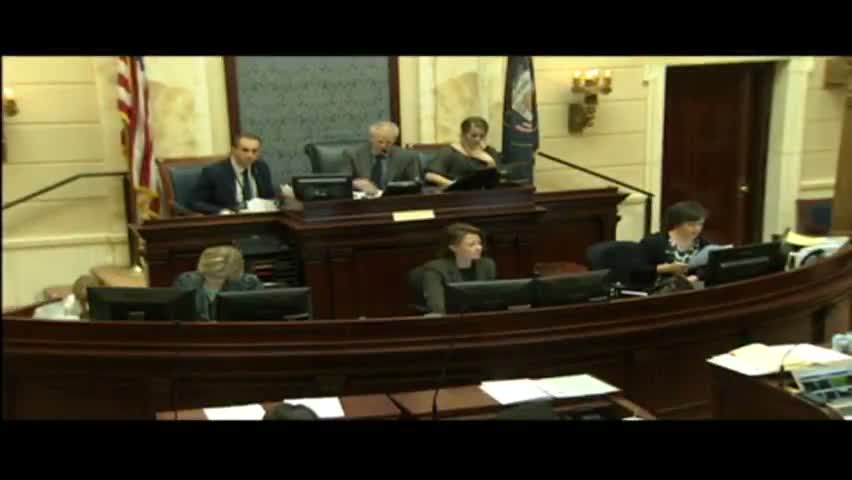
Senate debates air-quality bills: state rule flexibility and local emissions enforcement draw pushback
Summary
Senators debated bills allowing state-specific air-quality rules and preserving county emissions enforcement. Sponsors said the changes give DAQ and counties tools to address Utah's unique topography; opponents warned of weakening protections and of procedural concerns about anonymous complaints and mandatory re-inspections.
A cluster of air-quality measures drew extended floor debate on Day 43 as sponsors argued state-specific rules and local enforcement tools are needed to respond to Utah’s unique geography and emissions challenges.
Senator Wyler (HB 2 26) said the bill removes statutory barriers that make it difficult for the Division of Air Quality (DAQ) to adopt Utah-specific rules aimed at protecting public health and the environment, and cited the StairCycle compliance dispute as an example where federal-focused language constrained local options (SEG 1576–1600). Sponsor Senator Weiler framed companion/related bills (including HB 2 29) as technical fixes to align state code with federal definitions while preserving the administrative rule process and public hearings (SEG 1930–1966).
On vehicle emissions enforcement, Senator Weiler introduced House Bill 110 to preserve county authority in five nonattainment counties to enforce emissions rules and, where noncompliance continues, to revoke registrations as a last resort. Supporters said the county programs have brought many vehicles into compliance; critics worried about anonymous complaints leading to mandatory retesting and about whether the bill expands county powers beyond the existing status quo (SEG 5196–5569). Senator Thatcher and others raised procedural and fairness concerns; sponsor respondents said the bill codifies an existing, functioning practice and restores clear authority after guidance from the Attorney General that some county enforcement actions were ambiguous (SEG 5239–5294, SEG 5353–5371).
Senators debated technical language and tradeoffs between federal primacy and local flexibility. After floor discussion, related air-quality measures were advanced for further consideration or placed on third reading; HB 110 passed on a close vote after an extended roll call (SEG 5466–5569).