Get Full Government Meeting Transcripts, Videos, & Alerts Forever!
Get email alerts on the Water Policy topic
No spam. Unsubscribe anytime.
Senate advances HB 25 to reaffirm state water engineer authority and protect existing water rights
Summary
Sponsor Senator Dayton said HB 25 seeks to restore certainty in Utah water law by reestablishing the state water engineer as gatekeeper to prevent impairment of existing water rights; Senate voted to read the bill for a third time with 24 yea, 0 nay, 5 absent.
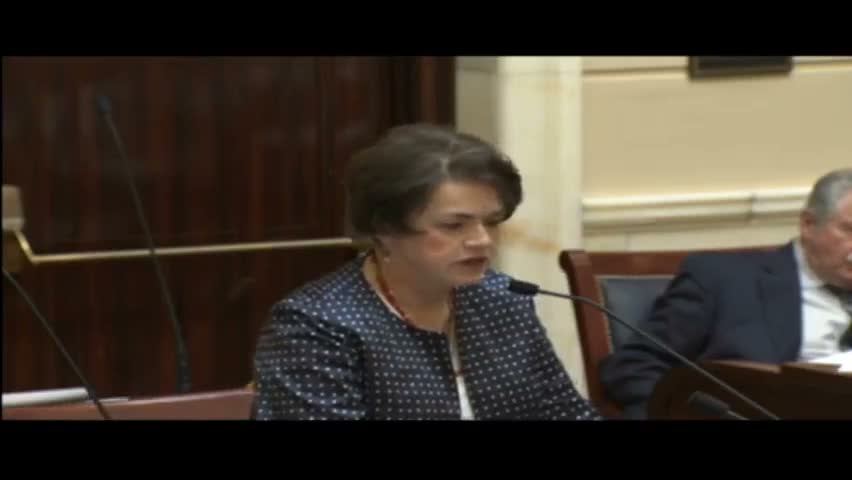
Senator Dayton told the Utah Senate that House Bill 25 seeks to "maintain the certainty and predictability that we have had in our Utah water law since 1903" by reaffirming the role of the state water engineer in protecting existing water rights.
Dayton said the measure responds to a recent Supreme Court ruling that created uncertainty and that the bill would allow holders of existing water rights to contest attempts to establish new rights that would impair them. He listed broad stakeholder backing, including the Utah Farm Bureau, large water districts, the state water engineer, the Executive Water Task Force, the Utah Association of Special Districts, Utah Waters Association, Utah Manufacturers Association, Utah Mining Association, the Utah Association of Realtors and the Property Rights Coalition.
After floor discussion concluded, the Senate held a roll‑call vote on reading HB 25 for a third time. The presiding officer announced that HB 25 "had received 24 yay votes, 0 nay votes, 5 being absent; shall be read for a third time." The vote advances the bill's procedural status on the Senate calendar.
Sponsor comment and stakeholder lists were delivered on the floor; no amendment altering the bill's substantive gatekeeping provisions was adopted during the floor remarks recorded in the transcript. Next steps indicated by floor procedure include enrolling the measure and any required committee/fiscal follow‑up if introduced later stages require it.
The Senate's action does not itself change statute — it moves the bill forward in the legislative process toward final enactment depending on future readings and reconciliations with the House version.