Get Full Government Meeting Transcripts, Videos, & Alerts Forever!
Get email alerts on the Fiscal Policy Article V topic
No spam. Unsubscribe anytime.
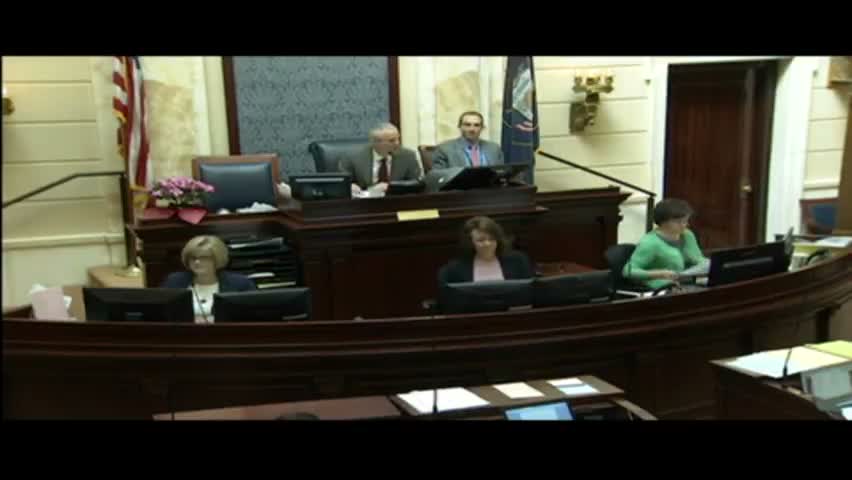
Senate approves resolution calling for Article V convention to pursue a balanced‑budget amendment
Summary
The Utah Senate approved first substitute HJR 7, a resolution urging an Article V convention limited to a balanced‑budget amendment; supporters called for state action on federal debt while opponents warned a convention could open broad constitutional change. The resolution passed under suspension of rules and will be transmitted to the House.
SALT LAKE CITY — The Utah Senate voted to approve first substitute House Joint Resolution 7 (HJR 7), a measure urging Congress or the states to pursue an Article V convention limited to proposing a balanced‑budget amendment to the U.S. Constitution.
Sponsor Senator Bramble Bridal (Senator Bridal) said the resolution is a way for states to reassert their constitutional authority and urged action to prevent growing federal debt. "What this amendment calls for ... simply says that Congress live within your means," the sponsor said during floor remarks, framing the resolution as a check on federal fiscal policy.
Several senators questioned the approach. Senator Davis (Senator Davis) warned that a convention could have wide‑ranging consequences and argued that electing different federal representatives is an alternative. He explained his no vote by saying, "Once you call that convention, it's a wide open convention," and warned major constitutional protections could be at risk. Senator Dabakis and others echoed concerns about a run‑away convention.
Sponsor Bridal and supporters responded that Article V includes procedural safeguards (notably ratification by 38 states) and that a narrowly focused convention remains constrained by the ratification process. After procedural votes to suspend and then read the resolution a second and third time, the Senate recorded the final roll call; the first substitute HJR 7 received 15 yay votes and was signed in open session and transmitted to the House for the speaker's signature.
The vote marks a symbolic legislative action urging a process at the federal level rather than enacting state law. The resolution's proponents framed it as sending a message about fiscal responsibility; opponents cautioned about unintended constitutional consequences should a convention be called and later broaden its remit.