Get Full Government Meeting Transcripts, Videos, & Alerts Forever!
Get email alerts on the Tax Policy topic
No spam. Unsubscribe anytime.
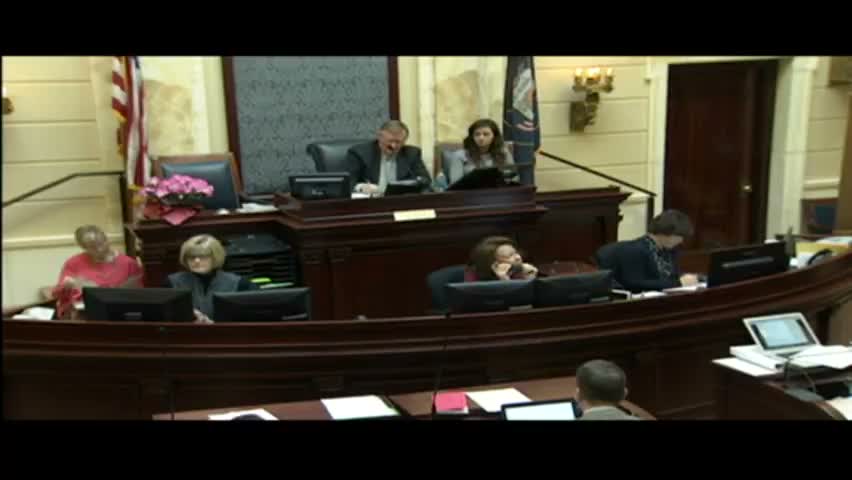
Senate passes sales-and-use tax reporting bill aimed at platforms after Supreme Court signals
Summary
The Senate approved SB192 to require platforms to report in-state sellers that exceed a $25,100 quarterly threshold to the Tax Commission; supporters said the bill helps states respond to a recent Supreme Court decision, while opponents warned of litigation risk; the measure passed 16–9–4.
The Utah Senate passed Senate Bill 192, a sales-and-use tax reporting measure that asks platforms to notify the Tax Commission when a seller exceeds $25,100 in a calendar quarter in Utah, a threshold sponsors said helps state tax authorities identify remote sellers.
Senator Harper, the sponsor, framed the bill as a state-level response to changes in the national legal landscape and urged action so states can press Congress or the courts to settle remote-sales collection rules. He referred to a recent Supreme Court opinion and to Justice Kennedy's concurrence as rationale for states to press the issue.
Supporters said the measure helps states regain control over sales-tax administration as e-commerce grows; Senator Bramble said the bill may provide a vehicle to challenge the earlier Quill precedent in the courts and stressed the broader policy goal of sales-tax parity. Opponents raised legal and litigation concerns. Senator Escamilla said she worried the state could be sued for creating burdensome requirements and said, "I don't think we're in a position to continue paying lawsuits like we did with, other bills that we passed here." Senator Harper acknowledged the concern but said the bill keeps avenues open — through states, Congress and the courts — to address remote sales tax collection.
The Senate recorded a roll-call result for SB192: the bill passed with 16 aye votes, 9 nay votes and 4 absences and will be transmitted to the House for further consideration.
What to watch: Implementation details, the Tax Commission’s administrative rules, and any legal challenges from businesses that might dispute the reporting requirement. The sponsor and supporters signaled the intent to use state-level statutes to push the broader national solution.