Get Full Government Meeting Transcripts, Videos, & Alerts Forever!
Get email alerts on the Medicaid Expansion topic
No spam. Unsubscribe anytime.
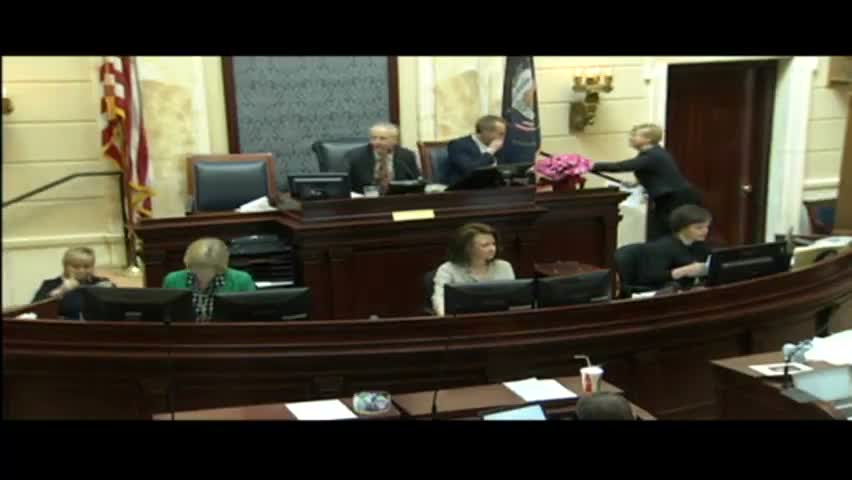
Senate approves two-year Medicaid expansion pilot after hours of debate
Summary
The Utah Senate passed first substitute S.B. 164, a two-year Medicaid expansion measure that sponsors say will use $25 million in one-time state funding to draw federal dollars and expand coverage to adults in the coverage gap; the bill passed on third-reading by a 21-8 vote after extended debate over cost, crowd-out and federal dependence.
The Utah Senate on third reading approved first substitute Senate Bill 164, a two-year Medicaid-expansion plan aimed at covering adults in the state's coverage gap and bringing federal funding back to Utah. The bill passed 21-8.
Senator Shiozawa, the floor sponsor, told colleagues the substitute shortens the program to two years and estimated the cost at about $25 million for that period. "The overall cost for 2 years is $25 million," he said, adding the figure included administrative costs and conservative assumptions about woodwork and crowd-out effects. He said the plan uses one-time general funds and seeks waivers from the federal government to secure enhanced matching rates.
Why it matters: backers argued the proposal would provide primary care access to tens of thousands of uninsured adults, reduce uncompensated care delivered in emergency rooms, and return federal dollars to Utah's economy. Opponents warned the state would be constrained by federal rules and could face growing long-term obligations if the pilot continued beyond two years.
Debate highlights and concerns
Several senators pressed sponsors for fiscal detail and cautioned about crowd-out (employers dropping private coverage) and the so-called "woodwork" effect (previously eligible but unenrolled people signing up). Senator Jackson asked how the program would affect providers and whether premium-subsidized marketplace coverage might shift provider behavior away from traditional Medicaid patients. Shiozawa acknowledged the risk and said the bill attempts to factor in federal penalties, eligibility screening, and savings from related programs to arrive at a conservative cost estimate.
Senator Dabakis urged fuller expansion, saying several governors have accepted full Medicaid expansion and arguing that the state would receive substantial federal dollars. "Some wise Republican governors ' recognized that to just plain take full Medicaid expansion is a wise thing to do," Dabakis said.
Senator Christensen, speaking in opposition, framed the choice differently: "By voting for Healthy Utah, we are turning our backs on solid conservative principles," he said, adding concerns about expanding government and long-term state commitments.
Votes and next steps
The Senate recorded 21 yea votes and 8 nay votes and ordered the first substitute read for a third time. Sponsors emphasized the two-year, one-time funding limit and pledged to continue negotiations with the House and federal officials as needed.
What the bill does (as described on the floor)
- Limits the program to two fiscal years and funds it initially with one-time general funds. - Uses federal match to subsidize premiums for adults in the coverage gap and establishes case management and cost-sharing measures for inappropriate ER use. - Requires monitoring of employment and participation for enrollees and includes provisions to exit the program if federal funding declines.
Authorities and fiscal notes
During floor discussion senators referenced the Patient Protection and Affordable Care Act (the Affordable Care Act) as the federal framework under which federal matching funds and waivers would be sought. The sponsor cited fiscal analysis estimating approximately $25 million in state costs for the two-year pilot; a separate fiscal note on the original bill (provided to the floor) identified a one-time funding figure of $50,000,000 to seed implementation and projected an ongoing state cost of about $51,444,300 by 2021 under a full expansion scenario.
The bill will proceed to follow-up conference and negotiation with the House for any final agreement.
Ending
The Senate concluded floor action on S.B. 164 by ordering the measure for the next procedural step after the recorded vote; senators on both sides signaled further negotiations would continue with the House and federal officials.