Get Full Government Meeting Transcripts, Videos, & Alerts Forever!
Get email alerts on the Search And Seizure topic
No spam. Unsubscribe anytime.
Senate amends search-and-seizure law to require warrants for certain new surveillance imaging
Summary
Senate passed SB 226 as amended to require judicial review and a warrant before law enforcement uses certain radar-based imaging equipment that can penetrate walls; sponsor said the amendment fixed drafting errors and emphasized Fourth Amendment protections.
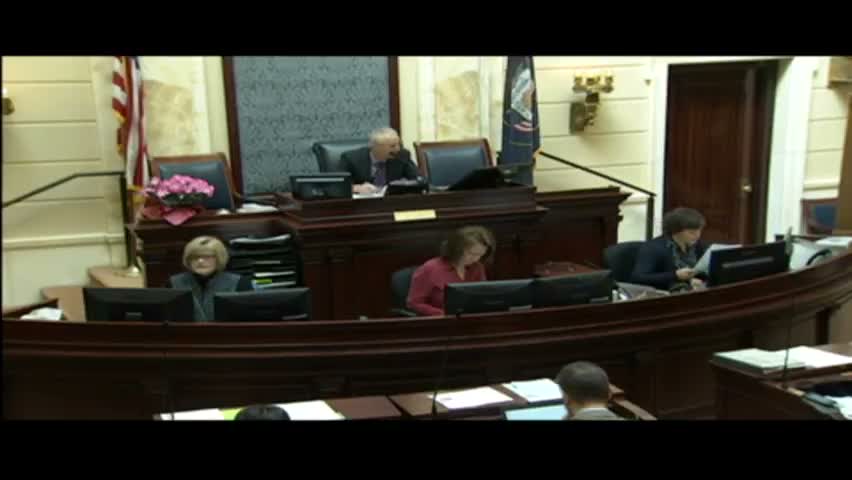
The Utah Senate on the floor adopted an amendment and passed Senate Bill 226, a bill that requires judicial review and a warrant before law enforcement may use certain radar-based surveillance and imaging technologies that can ‘‘look through walls.’’
Senator Madsen, the bill sponsor, told colleagues the measure is intended to ensure law-enforcement use of new surveillance imaging respects the Fourth Amendment and includes judicial oversight. He introduced an amendment (Amendment B) to correct drafting errors flagged by colleagues; the chamber approved the amendment on a voice vote and then passed the bill on a roll-call vote (24 yeas, 0 nays, 5 absent).
Nut graf: Supporters said the bill updates search-and-seizure law to reflect new technologies while preserving constitutional standards; supporters also framed the amendment as technical corrections to the original language. Opponents did not force extended debate on the floor once the amendment was adopted.
What the bill does: the sponsor said the bill requires a warrant and judicial review before law enforcement uses advanced radar- or imaging-based surveillance that can effectively ‘see through’ structural barriers. The floor debate focused on the need to protect privacy rights under the Fourth Amendment while allowing for lawful investigative tools under judicial supervision.
Next steps: SB 226 was transmitted to the House following Senate passage. If enacted, the change will require courts and agencies to apply updated warrant standards to specified surveillance technologies and may require agencies to adopt procedures for seeking judicial authorizations.