Get Full Government Meeting Transcripts, Videos, & Alerts Forever!
Get email alerts on the Medical Cannabis topic
No spam. Unsubscribe anytime.
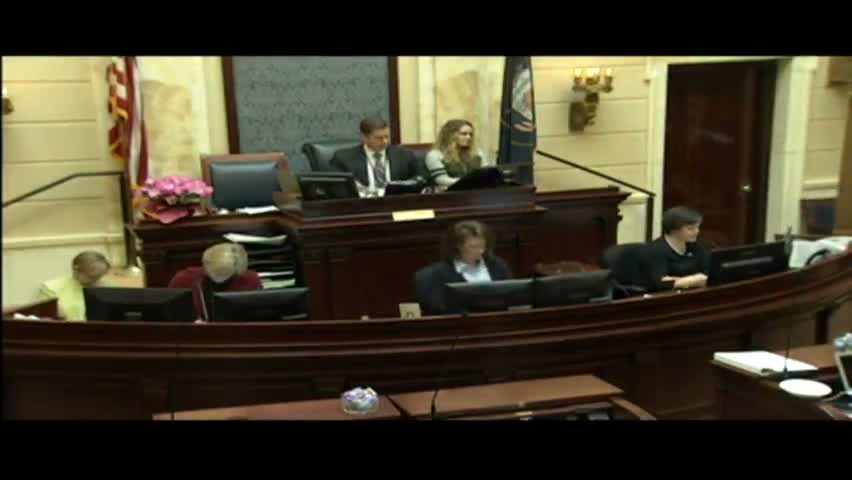
Senate spends hours on tightly regulated medical cannabis bill; sponsor to post substitute
Summary
Senators heard an extended, time‑certain briefing on Senate Bill 259 proposing a regulated medical cannabis program limited to specified conditions and specialist physicians; sponsor said a substitute will be circulated and the bill was circled for third reading.
Senator Dan Madsen led an extended, time‑certain floor presentation of Senate Bill 259, a proposal to authorize a tightly regulated medical cannabis program for a limited set of medical conditions.
Madsen said the bill would create four commercial components — cultivation, processing, testing and dispensaries — and implement a ‘‘seed‑to‑sale’’ tracking system to prevent diversion. ‘‘This bill simply introduces a very small increment of highly regulated freedom for willing physicians and willing patients who want to consider medical cannabis as an augmentation to their treatment or maybe as an alternative to their treatment,’’ Madsen said.
He described restrictions intended to narrow use to patients with serious diagnoses and to limit prescribers to relevant specialists: ‘‘We have identified the diseases or the conditions, and we've also identified the physicians. . . . The specialty that treats you is the specialty that will prescribe,’’ he said.
Senators asked detailed operational and oversight questions. Senator Vickers expressed concerns about inventory control and independent inspection: he pressed whether seed‑to‑sale tracking and unannounced inspections would be sufficient to prevent leakage and diversion. Madsen replied the system would include bar‑coding, quantity limits tied to prescriptions, and a payment/authorization mechanism to prevent patients from obtaining more than the prescribed amount.
Other senators raised zoning, independent lab testing, day‑supply limits, and whether physicians could hold ownership stakes in dispensaries. Madsen said his team had not prohibited physician ownership but signaled willingness to consider such a restriction in the substitute language.
Madsen also addressed fiscal questions, saying the program is intended to be self‑sustaining and that a revised fiscal note would be produced with simplified money‑movement mechanics.
Several senators, including Senator Wyler, objected to cutting off debate; sponsors and colleagues agreed to post a substitute and continue discussion on third reading. The Senate voted to circle SB 259 so members can review substitute language and the measure will be taken up again on third reading.
Next step: the sponsor said he will post the substitute language for senators to review before third reading.