Get Full Government Meeting Transcripts, Videos, & Alerts Forever!
Get email alerts on the Education topic
No spam. Unsubscribe anytime.
Senate advances substitute to require LEAs set aside 30% of WPU for dropout recovery
Summary
Senate substitute to SB116 would require local education agencies to reserve 30% of a student's WPU equivalent when a student formally drops out or exceeds 10 consecutive absences to fund dropout‑recovery services; sponsors say it pairs a funding 'stick' with an ADM 'carrot' to incentivize re‑engagement.
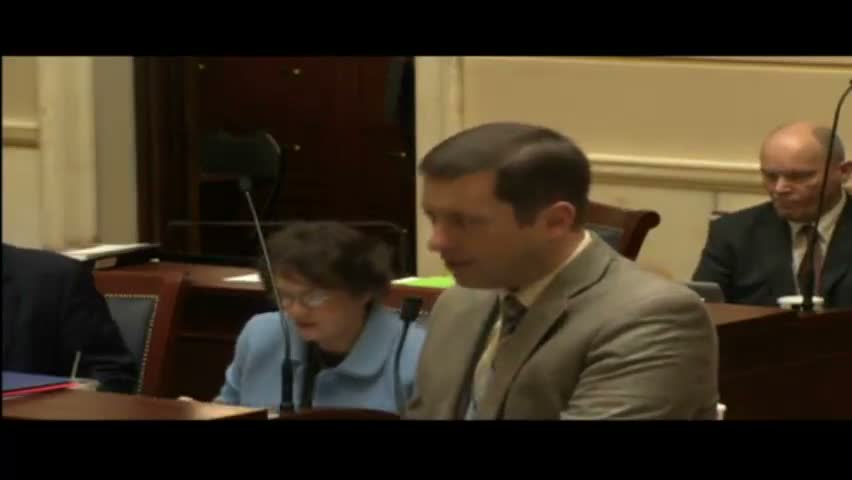
Senator Stephen Osman introduced a substitute to Senate Bill 116 designed to make dropout recovery a stated priority and to require local education agencies (LEAs) to set aside 30% of the Weighted Pupil Unit (WPU) equivalent for any student who formally drops out or is dropped for 10 or more consecutive days. The reserved funds must be used for dropout recovery services, either provided by the LEA or by a third‑party provider meeting minimum criteria.
Osman said the bill balances a short‑term funding requirement with a long‑term financial incentive: if a recovered student makes adequate monthly progress in a dropout recovery program, the LEA may count that student toward ADM the next year. Sponsor materials cited state dropout estimates and economic impacts (sponsor cited figures during the presentation).
Floor questions focused on accountability if recovery efforts fail, whether parents will be contacted, and potential budget pressures on LEAs forced to reserve funds mid‑year. Osman responded that districts will report results to the Education Interim Committee, that agencies already receive funding adjustments during the year and that existing procedures require contacting parents for minors; he also offered to add explicit parental‑contact language to the bill.
The Senate substituted and circled the bill to give members time to review the literature and handouts; later the Senate ordered the second substitute for a third reading after extended discussion.
What happens next: the bill was moved toward a third reading; legislative committees and appropriations processes may review accounting and reporting provisions and whether to add explicit parental notification language.