Get Full Government Meeting Transcripts, Videos, & Alerts Forever!
Get email alerts on the Healthcare Medicaid topic
No spam. Unsubscribe anytime.
Senate approves two‑year Medicaid pilot amid sharp fiscal debate
Summary
The Utah Senate passed first substitute SB 164, a two‑year Medicaid-related pilot (often discussed as the 'Healthy Utah' plan), after a lengthy debate over federal match rates, a $36 million state fiscal note and the risks of funding ongoing programs with one‑time money.
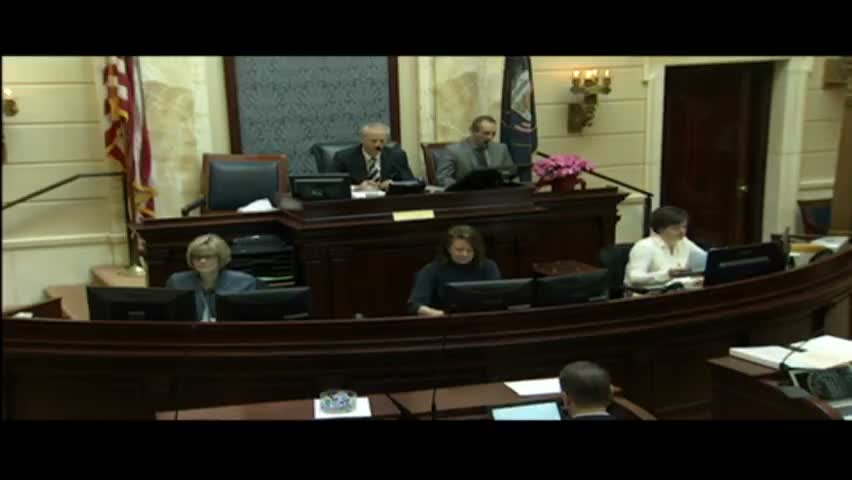
SALT LAKE CITY — The Utah Senate voted to pass first substitute Senate Bill 164, a two‑year pilot program that would expand access to Medicaid‑style coverage for a defined population, after extended debate over projected state costs and future federal funding.
Senator Shiozawa, the bill sponsor, told colleagues the measure is "a starting point within the Senate" and described the proposal as a temporary, two‑year pilot the chamber should move to the House for further consideration. He said the program is designed to take advantage of a high federal match early in the pilot and to allow the state to study implementation before any longer‑term commitment.
Opponents, led in floor remarks by Senator Henderson, pressed fiscal and policy concerns. Henderson noted that the federal match rate would be nearly 100% for fiscal year 2016, taper to 95% for a later period and ultimately plateau around 90% in subsequent years. She and others warned that the state would need to front funds and that the bill’s fiscal note—which opponents cited as $36,000,000 in state costs during the pilot—raises the prospect of using one‑time money to start an ongoing program. "We are using one‑time money to fund an ongoing program," Henderson said, arguing the practice is fiscally risky.
Supporters, including Senator Bramble and Senator Wyler, described the measure as a constrained pilot with an explicit sunset. Bramble said the bill "repeals after 2 years" and framed the vote as a reluctant but pragmatic choice given federal constraints. Wyler emphasized the proposal is not full Medicaid expansion and urged colleagues to support the pilot as a way to test state outcomes.
Senators exchanged questions about match rates and long‑term costs. The sponsor acknowledged some figures were not available on the floor and invited colleagues to consult fiscal analysts for precise estimates. Multiple senators said they were "holding their nose" as they voted for the bill, underscoring narrow political divisions.
On roll call, first substitute SB 164 recorded a legislative tally described on the floor as 17 "yay" votes and 11 "nay" votes with 1 absence; the bill passed and will be transmitted to the House for its consideration.
What happens next: The Senate sent the bill to the House; sponsors and fiscal analysts said they expect follow‑up briefings to refine cost projections and implementation details if the House takes up the measure.
Sources: Floor remarks by Senator Shiozawa (bill sponsor), Senator Henderson (opponent) and floor roll call recorded in the Senate session transcript.