Get Full Government Meeting Transcripts, Videos, & Alerts Forever!
Get email alerts on the Election Law topic
No spam. Unsubscribe anytime.
Senate approves S.J.R. 2 to let voters decide party nominating rights; debate centers on cost and scope
Summary
Senate Joint Resolution 2, a proposed constitutional amendment to let voters decide whether political parties— internal rights to determine nomination processes "may not be infringed," advanced to a third reading after a 17–12 roll call amid questions over whether it could force the state to pay for party-chosen primaries.
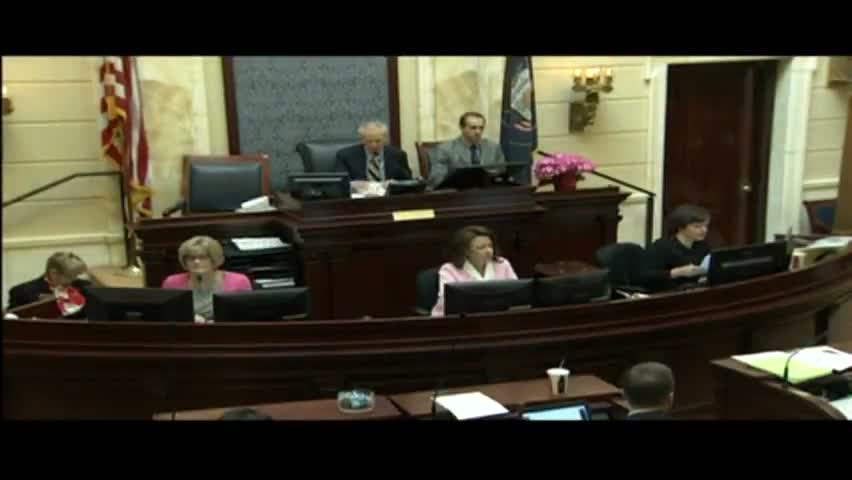
The Utah Senate voted on Feb. 18 to move S.J.R. 2, a proposed constitutional amendment about political parties' internal nominating rights, to a third reading after a contested floor debate.
Senator Jenkins, sponsor, described the resolution as a simple constitutional question to give parties and voters a choice on whether a party's rights "may not be infringed" by the state in determining how its candidates are chosen. "Their party should be able to decide... how they're gonna choose their candidates and how they're gonna put them on the ballot," Jenkins said.
Senators raised specific concerns about the practical implications. Senator Bramble asked whether a constitutional right of this scope could require the state to fund a public primary if a party chose that nominating process; Jenkins acknowledged the issue was complex and said he could circle the amendment and return with more detail. Senator Weiler said he would vote 'I' and criticized perceived inconsistency in past votes on related measures. Senator Hilliard said he had been persuaded to support keeping the issue alive to allow additional deliberation before a public vote.
The roll call recorded 17 yay votes and 12 nays; the resolution was ordered read for a third time and, if later adopted, would be placed on the ballot for voters. Sponsors said the proposal is intended to put the question to the electorate, while critics warned it could shift costs or alter procedural roles if the constitutional language is broad.
The debate highlighted tensions between party autonomy, legislative authority over election administration, and the potential budgetary consequences if parties chose processes that require state administration and funding.