Get Full Government Meeting Transcripts, Videos, & Alerts Forever!
Get email alerts on the Legislation Roundup topic
No spam. Unsubscribe anytime.
Senate passes multiple third‑reading bills including aquatic invasive‑species fee, housing and domestic‑violence clarifications
Summary
On third reading the Utah Senate passed a package of bills and sent them to the House, including a $10 boat‑license increase aimed at invasive‑species prevention (First Sub SB 89), amendments to the Utah Housing Corporation Act (SB 67), domestic‑violence sentencing language (SB 59) and other measures; several bills passed unanimously or with large majorities.
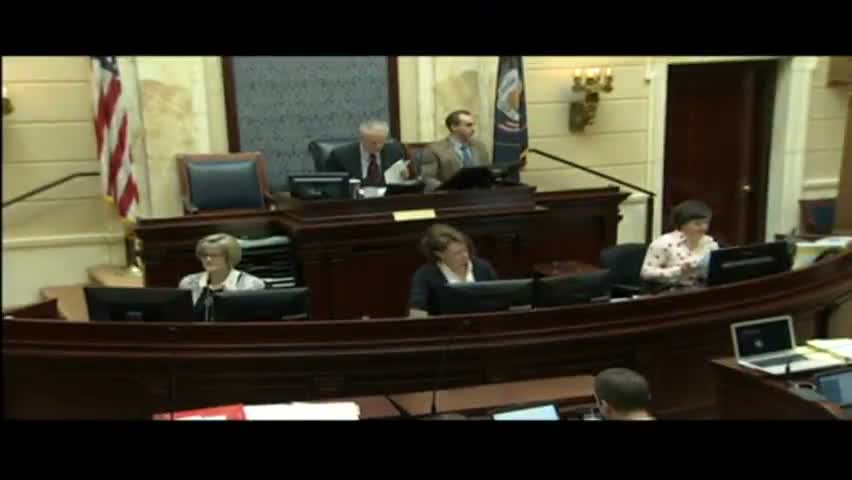
The Utah Senate completed its third‑reading calendar and sent a set of bills to the House for further consideration.
First Substitute Senate Bill 89 (aquatic invasive species fee), presented by Senator Jenkins, increases certain boat licensing fees by $10 to support prevention programs. The sponsor noted ballast tanks in wake boats can transport invasive mussels; the measure drew no extended debate and passed on a roll call (28 yay, 0 nay, 1 absent).
Senate Bill 67 (Utah Housing Corporation Act amendments), introduced by Senator Weiler, renumbers the act under independent entities, repeals an absolute surety bond requirement for trustees, and removes a statutory capital reserve provision (sponsors said other fidelity coverage is already in place). After questions about the capital reserve and insurance levels, the bill passed on roll call (26 yay, 0 nay, 3 absent).
Senate Bill 59 (domestic‑violence amendments), presented as clarifying sentencing information to ensure judges have records of prior domestic‑violence convictions, passed without recorded opposition (27 yay, 0 nay, 2 absent).
Several other bills on the third reading calendar also passed, including measures to create a redevelopment‑code review task force and changes to Motor Vehicle Enforcement Division accounting (discussed and amended on the floor). Where amendments or fiscal notes were noted, sponsors said details would be resolved in committee or in the budget process.
All votes reported on the floor were roll calls; the tally for each bill is recorded in the Senate journal and was announced on the floor after each vote. The Senate adjourned until 11 a.m. the following day.