Get Full Government Meeting Transcripts, Videos, & Alerts Forever!
Get email alerts on the Education Graduation topic
No spam. Unsubscribe anytime.
Senate approves substitute education bill; scholarship for early graduates doubled and IB courses added
Summary
First Substitute SB 33, sponsored by Senator Osman, directs the Utah State Office of Education to provide eighth‑grade college‑readiness information, increases the Centennial Scholarship for early graduates from $1,000 to $2,000 and was amended to explicitly include international baccalaureate courses. The bill passed third reading 23–5–1.
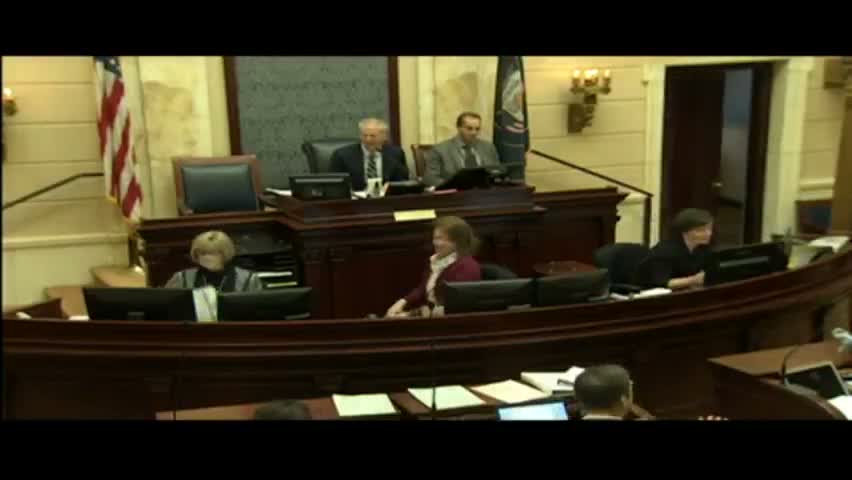
The Utah Senate on the floor passed First Substitute SB 33, a public education measure that directs the Utah State Office of Education to provide eighth‑grade students and their parents information about early graduation and college readiness and increases the Centennial Scholarship award for early graduates.
Senator Osman, sponsor of the bill, described it as “an opportunity for us to encourage students to take advantage of the opportunity we have in our state to graduate early.” He said the bill requires that the State Office of Education provide parents and students in eighth grade with information on what it takes to graduate early and to be college ready. The bill raises the Centennial Scholarship for early graduates from $1,000 to $2,000, a change the sponsor said carries a fiscal impact but produces a positive fiscal note because of anticipated savings when students graduate early.
During floor consideration Senator Osman offered an amendment to add international baccalaureate (IB) courses to the list of rigorous coursework cited in the bill. Senator Dayton opposed adding IB, saying parents have no control over IB curriculum and expressing discomfort with including it. Osman responded that IB, like Advanced Placement, represents a nationally organized set of courses and that listing IB recognizes academic rigor rather than taking a position on curriculum governance.
After debate the Senate recorded a third‑reading tally of 23 yea votes, 5 nay votes and 1 absent; the bill advanced for enrollment and further processing.