Get Full Government Meeting Transcripts, Videos, & Alerts Forever!
Get email alerts on the Civics Education topic
No spam. Unsubscribe anytime.
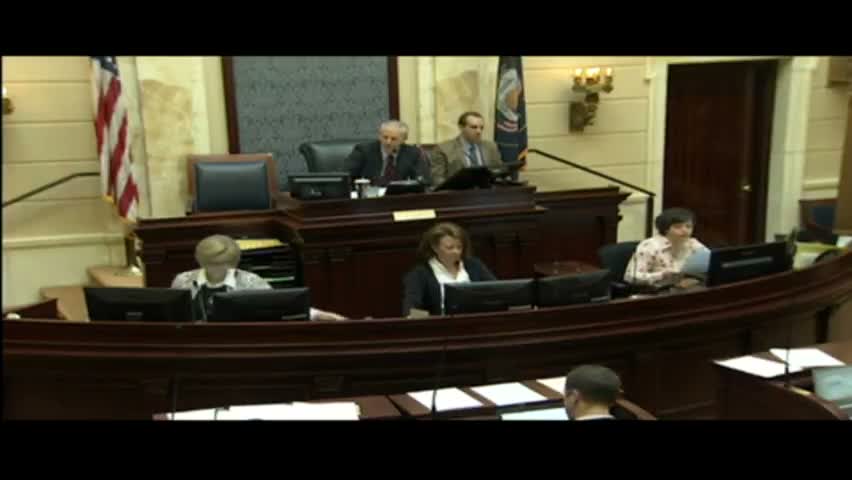
Senate approves civics education bill after debate over testing rules
Summary
The Utah Senate passed SB 60, the American Civics Education Initiative, after a day-long floor debate over amendments that would change when and how a short civics test applies to graduating students. Lawmakers debated exemptions, sampling alternatives and timing before approving the measure as amended.
The Utah State Senate on Day 17 approved SB 60, the American Civics Education Initiative, after extended debate over who the test would apply to and how it would be administered. Sponsor Senator Lyle Hillyard/ Senator Stevenson (as recorded) moved the bill and several amendments onto the floor; lawmakers ultimately passed the measure as amended and sent it on for enrollment.
Supporters said the bill's purpose is to ensure high school graduates have a basic understanding of citizenship and voting. Senator Stevenson summarized the bill's intent and defended its administration, saying, "It's a 5 minute test that can be given once a month," arguing the exam would not significantly disrupt classroom time. He said the test is designed to make graduates "prepared to be a more involved citizen and a more informed voter."
Opponents and moderates pressed for clarifying changes. Senator DeBackus offered amendments to limit the bill's reach and to permit the State Board of Education to waive the test for "special circumstances," citing students who recently moved into Utah or those with individualized education programs. DeBackus framed the added language as a safety valve to prevent students from losing a diploma for reasons beyond their control, noting the change "adds a layer of flexibility" and would protect students in unusual circumstances.
The Senate considered a separate substitute put forward by Senator Weiler to reduce the number of questions administered (from 100 questions to sampling 50 with adjusted thresholds) to save classroom time. Weiler argued this would reduce administration time without asking students to study fewer topics. Debate included senators who said the test would take only a few minutes to administer and that students would still need to study the full question set.
Amendments were debated and voted on at the dais. One proposed amendment allowing the State Board of Education to waive the test failed on a roll call; other clarifying amendments were adopted. After a call of the Senate to ensure members were present, the chamber held a final roll-call vote on SB 60 as amended and approved the bill; the roll-call record shows at least one recorded 'no' vote by Senator DeBackus during the process, while the majority voted to pass the legislation.
The bill now proceeds under normal enrollment and transmittal procedures. The Senate recessed until 2 p.m.