Get Full Government Meeting Transcripts, Videos, & Alerts Forever!
Get email alerts on the Federalism topic
No spam. Unsubscribe anytime.
Congressman Rob Bishop praises federalism, warns Utah to weigh federal money; highlights test range and health-care options
Summary
Congressman Rob Bishop addressed the Utah Senate, urging local control under federalism, offering qualified support for an Article V convention, declining to tell the Senate whether to expand Medicaid, and stressing the Utah Test and Training Range and Hill Air Force Base’s economic importance.
Congressman Rob Bishop told the Utah Senate that more decision-making should be made at state and local levels and defended the principle of federalism as giving people choices for themselves.
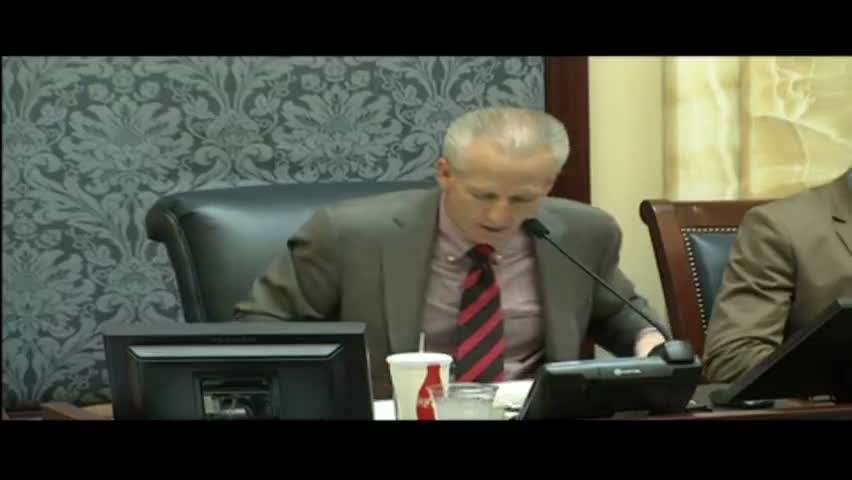
Bishop, introduced by the presiding officer as the delegation’s representative to the state, framed federalism as a practical way to return decisions to states and localities and cautioned about accepting federal money without consideration of future restrictions. "Federalism simply means people get to make choices for themselves," he said. He described federalism as neither overtly partisan nor ideological but as a vehicle for local decision-making.
Why it matters: Bishop’s remarks matter because they reflect the message members of Utah’s congressional delegation are bringing to state policymakers as they consider budget and policy choices, including whether to accept Medicaid expansion and how to weigh federal program conditions.
Bishop discussed an Article V constitutional convention as a lawful process but warned of the risk of a "runaway convention" unless scope is legally constrained. He cited the Madison Amendment as one way to limit the subject matter of any convention and said that addressing that concern would make the idea more palatable.
On Medicaid expansion, Bishop stopped short of prescribing a vote for the Senate: he said the choice belongs to the state and that the federal law that produced the position Utah faces was "a crappy piece of legislation and we were wrong to do it," but he repeatedly told senators he would not tell them how to decide. He urged weighing whether federal dollars are worth potential long-term restrictions.
Bishop also emphasized national-security and economic issues tied to Utah, urging support for the Utah Test and Training Range and for keeping Hill Air Force Base strong. He said expanding training-range capacity would help keep and add high-paying jobs in the state.
The session closed Bishop’s time for questions with a mix of substantive exchanges and public praise; Bishop invited further questions but did not press the Senate to any particular policy choice. The Senate recessed for additional business afterward.