Get Full Government Meeting Transcripts, Videos, & Alerts Forever!
Get email alerts on the Education Funding topic
No spam. Unsubscribe anytime.
Senate approves substitute bill to tie future WPU growth to aid lowest-funded districts
Summary
The Utah Senate passed a first substitute to Senate Bill 244 that changes how future weighted pupil unit (WPU) growth is distributed, directing one-third of future WPU increases toward lower-funded districts to narrow funding gaps; the substitute removes a prior charter-local-replacement provision and delays effectiveness until July 1, 2017.
The Utah Senate on March 7 approved a first substitute to Senate Bill 244, a school funding measure that alters the formula for distributing future increases in the state's weighted pupil unit (WPU). The substitute removes an earlier provision that would have required school districts to contribute 25 percent of local revenue to charter schools and instead creates an "equity pupil unit" mechanism that directs one-third of future WPU growth toward the state guarantee and lower-funded districts.
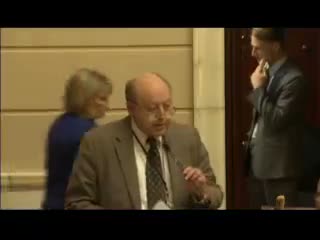
Sponsor Senator Fillmore, who presented the substitute on the floor, said the bill does not appropriate new money for the current year but changes how future appropriations are allocated. "If next year we increase the WPU by 3 percent, we would take 1 percent of that 3 percent and distribute it to the low-lying school districts," Fillmore said on the floor, characterizing the change as a formula adjustment rather than an immediate appropriation.
Supporters argued the change would steadily close a long-standing gap between higher- and lower-funded districts. The sponsor and backers noted that the substitute narrows the bill's scope from an earlier version and establishes a delayed effective date of July 1, 2017 to allow districts planning time. Proponents also emphasized that, unlike the earlier draft with a $21 million fiscal note, the revised substitute has no immediate fiscal note because it does not itself appropriate money.
Opponents and some districts urged caution. Several senators said the last-minute substitute had not received a full public hearing and raised questions about how the formula would affect specific districts and charter schools. One senator relayed messages from executive branch staff and district business officers who said there was not enough time to model the changes and that more data were needed to understand district-level impacts.
On the mechanics, the substitute increases the WPU value and the add-on WPU over time and sets a cap on the state guarantee adjustments; sponsor Fillmore described the cap and the formula for distributing future growth as intended to bring parity within about eight years.
The Senate suspended its three-reading requirement and passed the substitute on a roll-call vote; the clerk recorded the tally and the bill was transmitted to the House for further consideration. The bill's implementation date is July 1, 2017, and further rulemaking and district-level modeling were cited by several senators as next steps before funding changes take effect.