Get Full Government Meeting Transcripts, Videos, & Alerts Forever!
Get email alerts on the Energy Net Metering topic
No spam. Unsubscribe anytime.
Senate advances energy bill that shifts certain net‑metering policy and clarifies Public Service Commission role
Summary
The Utah Senate advanced a third substitute of a renewable-energy/net‑metering measure after extended floor debate. Sponsors said the changes give policy direction while retaining PSC oversight; critics warned the bill could undercut the PSC's role and harm solar-related businesses.
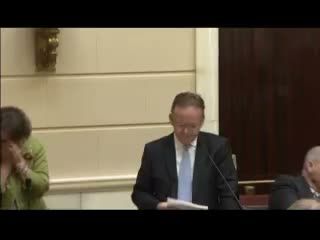
After more than an hour of floor debate, the Utah State Senate advanced a third substitute of a bill adjusting state policy on net metering and renewable-energy incentives, pushing the measure to the House for further consideration.
Senator Adams, the bill sponsor, said the substitute strikes the phrase "cost of service" from earlier language and gives the Public Service Commission (PSC) direction to evaluate a shift in how certain energy-balancing-account costs are handled, while still preserving the PSC's prudency review. "We've given [the PSC] policy directions, but they still have oversight," Adams said, adding the change includes reporting back and a sunset so the Legislature can reassess the policy in 2019.
Opponents said the change short-circuits an existing adjudicative process and risks "judge shopping." One senator warned the bill allows a powerful utility to seek a different forum rather than using the PSC's established procedures: "What this does is judge shop," the critic said, arguing that the PSC provides a formal hearing process with professionals who weigh evidence and make determinations.
Sponsor and supporters countered that the amendments were refined over months with stakeholder input, that the bill does not affect rooftop solar owners already in place, and that carve-outs in the substitute are intended to preserve incentives while redirecting some funds to broader clean-energy programs. "The amendment ... allow[s] those who would want to have Rocky Mountain Power come into a full rate case... Not at Rocky Mountain's discretion," the sponsor said, describing the change as opening options rather than removing oversight.
Several senators pressed for clarity on whether existing rooftop systems or small installers would be harmed. Sponsor Adams said the bill does not affect customers who already have rooftop solar; the primary effect relates to how limited subsidy programs and the energy-balancing-account step are administered.
After discussion and a motion to adopt the third substitute, senators recorded their support and the measure was moved on to the House for further consideration. The bill sponsor and floor proponents noted that the language was the product of negotiations and that additional refinements may occur as the legislation moves through the process.
The Senate also handled a large consent calendar the same day, passing multiple technical and policy bills on consent and adopting a concurrent resolution and several house bills; the chamber recessed until 2 p.m. following the business.
The next step for the energy measure is House consideration; no final implementation date was recorded on the Senate floor during this session.